|
 |
 | | | | | | |||||||||||||||||||||||||||||||||||||||||||||||||||||||||||||||||||||||||||||||||||||||||||||||||||||
| | | You are in: UK: Politics | |||||||||||||||||||||||||||||||||||||||||||||||||||||||||||||||||||||||||||||||||||||||||||||||||||||||
|
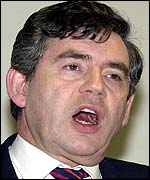
| | Friday, 19 July, 2002, 02:44 GMT 03:44 UK Wage demands 'must not hit services' 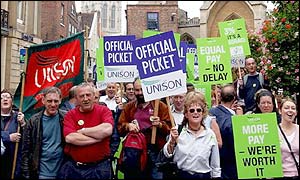 Public sector workers want a 6% pay rise A �61bn increase in public spending must not be seen as an excuse for increased pay claims by public sector workers, Chancellor Gordon Brown has warned. Excessive wage increases would prevent the money being used to improve services and recruit more staff for schools, hospitals and councils, Mr Brown said. His warning came the day after one million key workers throughout the UK held their first national strike since 1979, to demand a 6% pay rise. The chancellor, who was being grilled by backbench MPs on the Treasury Select Committee, was also asked about the possibility of future tax increases, which he refused to rule out. But he said he was confident about the thinking behind the spending review and the government's ability to meet its targets, even in a global economic downturn. 'Loss' Rejecting public sector workers' demands for a better deal Mr Brown told the committee: "There is an overall amount of money available for public services laid out to 2006 in the review.
"That would be a loss to the country as a whole." Wednesday's strike saw workers claim that the proposed 3% pay increase was insufficient, particularly in light of continued house price rises. But Mr Brown said any local authorities choosing to spend more than the government allocated to them would have to meet the cost by increasing council tax. 'Long term' Repeatedly asked whether the spending review meant there would be no tax rises before 2006, Mr Brown refused to make any promises. The chancellor said April's Budget, which saw an increase in National Insurance contributions, contained all the details of how his spending plans would be met. He said: "We have shown how our expenditure can be costed to 2006. "I believe that is more than any previous government has done to show over the long term how their spending is costed." Judgement The committee also scrutinised Mr Brown's claim that departments would only get budget increases if they met performance targets and demands for reform.
Tory MP Andrew Tyrie said: "What we really want to know is whether these targets have depth and meaning and so far we have been unable to find any depth and meaning." Mr Brown said 87% of targets had been met and it was the prime minister and electorate who would pass judgement on any ministers failing to run their departments properly. Reserves The chancellor said it would be wrong to "punish" taxpayers by withholding resources from services like the police if the Home Office missed targets. Asked whether the Ministry of Defence had been allocated enough money to fight a war in Iraq, Mr Brown said Treasury reserves would be used to meet any shortfall. He said: "Where there is an exercise entered into where troops are sent to Afghanistan or Sierra Leone or Kosovo or Macedonia, there will be money available from the reserve to meet the cost of this exercise." | |
See also:  17 Jul 02 | UK 15 Jul 02 | Politics 17 Jul 02 | Education Internet links: The BBC is not responsible for the content of external internet sites | |||||||||||||||||||||||||||||||||||||||||||||||||||||||||||||||||||||||||||||||||||||||||||||||||||||
| |
|  E-mail this story to a friend E-mail this story to a friend |
| |
|
| | | ||
 | ||||
 | | Back to top
| ||
| ---------------------------------------------------------------------------------- To BBC Sport>> | To BBC Weather>> | To BBC World Service>> ---------------------------------------------------------------------------------- © MMIII | News Sources | Privacy |