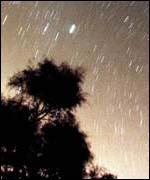
|
 |
 | | | | | | |||||||||||||||||||||||||||||||||||||||||||||||||||||||||||||||||||||||||||||||||||||||
| | | You are in: UK: N Ireland | |||||||||||||||||||||||||||||||||||||||||||||||||||||||||||||||||||||||||||||||||||||||||
|
| | Sunday, 17 November, 2002, 11:12 GMT Stargazers promised meteor show 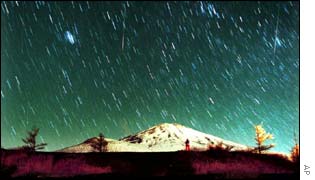 Leonids spotted above Mount Fuji, Japan Northern Ireland stargazers are being promised a weekend of spectacular night sky displays. Astronomers are monitoring the skies for one of the biggest ever meteor showers visible in Ireland. The peak is expected to be at the beginning of next week. Former BBC's Space Correspondent Leo Enright said it is a truly spectacular sight.
"It is Monday morning when people should be getting up at 4am to see it," he said. "This particular display - if Mother Nature had have organised something worthy of Children in Need, then this would be it. "This is the display of the year. What we are promised early on Monday morning is a meteor storm - these things don't happen very regularly, but we have had a number of them over the last several years at this time of year. "The earth is moving through space and is ploughing through the debris of the comet which passed our way several years ago. "We are going through bits of that comet which are called the Leonids." Brilliant flashes He said this was because they appeared to come from the constellation Leo as it rose in the eastern sky in the morning. Armagh observatory has been instrumental in forecasting the storm. The Irish Astronomical Association said it could be the best shower of shooting stars visible in Ireland for more than 100 years.
Terry Moseley of the association said the dusty remains of comets which collide with the Earth at tremendous speeds can produce brilliant flashes almost as bright as the moon. "You can see a few almost every clear dark night if you look long enough, but periodically the Earth passes through a dense swarm of these particles which have only recently come from their parent comet, giving what we call a meteor shower," he said. "In 1966 we passed very close to the main swarm of particles, from a comet called Tempel-Tuttle, and an incredible display of meteors was seen in the USA - at times they seemed to be falling as fast as snowflakes in a snowstorm. "It is estimated that the rate reached 150,000 meteors per hour for a short period. "Last year, rates of several thousand per hour were seen in other parts of the world." The association said the best time to see the shower would probably be from about 0200 GMT until dawn on Monday - particularly from 0330 to 0430 on Tuesday morning. "They can appear anywhere in the sky, but almost all will appear to come from above the eastern horizon, where Leo will be at that time," said Mr Moseley. "Leonids are the fastest of all meteors, with a speed of about 70 miles per second. "They appear as a bright streak of light lasting about a second, although some may leave luminous trails which persist for much longer." | | See also:  12 Nov 02 | Science/Nature 30 Nov 98 | The Leonids 98 08 Nov 99 | Science/Nature 15 Nov 99 | Science/Nature 18 Nov 01 | Science/Nature Internet links: The BBC is not responsible for the content of external internet sites Top N Ireland stories now: Links to more N Ireland stories are at the foot of the page. | |||||||||||||||||||||||||||||||||||||||||||||||||||||||||||||||||||||||||||||||||||||||
| |
|  E-mail this story to a friend E-mail this story to a friend |
| |
| Links to more N Ireland stories |
| | | ||
 | ||||
 | | Back to top
| ||
| ---------------------------------------------------------------------------------- To BBC Sport>> | To BBC Weather>> | To BBC World Service>> ---------------------------------------------------------------------------------- © MMIII | News Sources | Privacy |