
|
 |
 | | | | | | ||||||||||||||||||||||||||||||||||||||||||||||||||||||||||||||||||||||||||||||||||||||||||||||||||||||||||||||||||||||||||||||||||||
| | | You are in: Science/Nature | ||||||||||||||||||||||||||||||||||||||||||||||||||||||||||||||||||||||||||||||||||||||||||||||||||||||||||||||||||||||||||||||||||||||
|
| | Tuesday, 12 November, 2002, 16:13 GMT Meteor show due next week 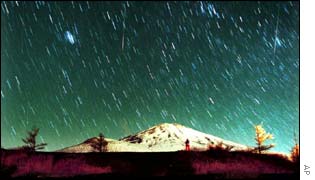 Leonids spotted above Mount Fuji, Japan Skywatchers are about to have their best chance to see the Leonid meteor shower for the next three decades, say experts. The Leonid display is predicted for the early morning hours of Tuesday 19 November, as viewed from Europe. If enthusiasts are lucky enough to experience clear skies, then they could see as many as two or three bright meteors a minute. It is possible that skywatchers in the US may also get a glimpse of the Leonids on the 19th. The "shooting stars" are actually particles from Comet Tempel-Tuttle which has a 33-year orbit around the Sun. The Earth passes through the cloud of dust left by the comet, and these particles burn up in the atmosphere, creating the light streaks. Look east Astronomers predict that this is likely to be the most intense shower for many years to come. Despite the fullness of the Moon, this year's Leonid shower should be very visible provided the sky is clear. In the UK, the area to watch is the stretch of sky between north-east and south-east between 0300 and 0500 GMT. Obviously, well-lit urban areas will hamper the view. And there is no guarantee that the shower will appear on cue. Little bullets Robin Scagell, the vice-president of the Society for Popular Astronomy, said: "If we do get a meteor storm, it should be worth setting the alarm for. "But you will need to watch for some time to stand a good chance of seeing the meteors." Despite the tiny size of the Leonid particles, their speed relative to the Earth makes them a hazard to any equipment orbiting outside the protection of the atmosphere. The European Space Agency has issued a warning to satellite operators to move their equipment to present the narrowest possible profile to the direction of the shower, and to power down any sensitive equipment. The agency has also recommended delaying spacecraft launches planned for this period. | | See also:  30 Nov 98 | The Leonids 98 08 Nov 99 | Science/Nature 15 Nov 99 | Science/Nature 18 Nov 01 | Science/Nature Internet links: The BBC is not responsible for the content of external internet sites Top Science/Nature stories now: Links to more Science/Nature stories are at the foot of the page. | ||||||||||||||||||||||||||||||||||||||||||||||||||||||||||||||||||||||||||||||||||||||||||||||||||||||||||||||||||||||||||||||||||||
| |
|  E-mail this story to a friend E-mail this story to a friend |
| |
| Links to more Science/Nature stories |
| | | ||
 | ||||
 | | Back to top
| ||
| ---------------------------------------------------------------------------------- To BBC Sport>> | To BBC Weather>> | To BBC World Service>> ---------------------------------------------------------------------------------- © MMIII | News Sources | Privacy |



