What is killing off the sparrow population in the UK's towns and cities? The once common house sparrow is now so rare that numbers are thought to be half that of 25 years ago. A lack of food could be killing off sparrows |
Theories abound on why so many sparrows have been lost, ranging from the destruction and damage of natural habitats to predation from the domestic cat and sparrow hawks. Pollution is also implicated. However, a PhD student from Leicester's De Montfort University says her in-depth study into sparrow breeding may hold the key to solving their mysterious disappearance.
Sparrows produce three sets of chicks from spring to summer.
But Kate Vincent, 25, is discovering that second or third broods of chicks born to birds living in urban areas are dying before they leave the nest.
It is unclear how the young sparrows are dying but in some places the number of deaths is so big that populations levels are dropping.
Ms Vincent is studying 619 nest boxes she put up across the city over the last three years and which she visits every week.
Picture courtesy Steve Knell
There are huge variations in sparrow numbers across the UK 
|
Data is proving difficult to find in Leicester's centre where, like many other large industrial cities, most of its birds have been lost.
Her best results are coming from the suburbs and the countryside.
In 2002 nearly half of the suburban second and third hatches did not survive, compared with all of those in the country areas succeeding.
She says that this year a similar pattern is emerging with 20% of the later chicks having failed so far in the countryside, while in the suburbs 38% are not reaching adulthood.
Answers have already been found to the countryside decline - the intensification of farming techniques - but the real question is why numbers have fallen so sharply in built-up areas.
Ms Vincent's study suggests the problem is deaths in the nest.
Post mortem tests are difficult because the bodies decompose quickly, but Ms Vincent says starvation and infection are both possible reasons for death.
Further work
She is now investigating the sparrows feeding patterns - what they eat, availability of insects and their foraging habitat. She has already discovered early and late broods have different diets.
The spring chicks seem to be treated to beetles and daddy longlegs while the problematic midsummer birds are fed on smaller insects like aphids.
Ms Vincent will finish her research next April but stresses that her findings do not provide a definitive solution.
However, she is the first person to undertake work of this kind and hopes follow-up surveys will not be far behind.
"It will probably come up with more questions than answers, but it does highlight some of the problems facing sparrows," she says.
"It is good, valuable research which can be carried on."


 One-Minute World News
  News services

 E-mail this to a friend
  Printable version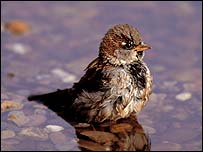
 In detail

