|
 |
 | | | | | | ||||||||||||||||||||||||||||||||||||||||||||||||||||||||||||||||||||||||||||||||||||||||||||||||||||
| | | You are in: UK: England | ||||||||||||||||||||||||||||||||||||||||||||||||||||||||||||||||||||||||||||||||||||||||||||||||||||||
|
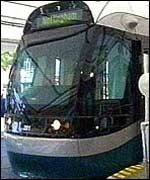
| | Saturday, 25 January, 2003, 10:29 GMT Getting trams back on track  Trams were once a familiar sight in Nottingham
 The first new tram which rolled off the production line was given the peculiar number 201. It was a fond nod towards a time when 200 electric trams trundled through the streets of Nottingham more than 65 years ago. "There is a nice sense of continuity," says Stephen Barker, marketing officer for Nottingham Express Transit (NET), the company which is building and will run the latest system.
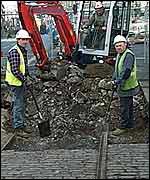
"It is convenient as well as they needed to have three digits and as it was possible it was nice to do it." A reminder of how Nottingham used to look was made last week when a stretch of track encased in its original cobbles was dug up in Upper Parliament Street by workers building the new track. Fittingly the new track will form the foundations of the new line. On the buses It is probably one of many stretches of track hidden beneath the pavements and tarmac of Nottingham's streets. Back in the 1920s there were nine routes criss-crossing the city covering nearly 26 miles. It was by far the most popular form of transport with thousands of tram journeys a day in Nottingham.
Now trams will once again trundle through the city streets as a green and viable form of transport. Local tram historian David Beardsell, who works with the Tramway Museum at Crich in Derbyshire, says it is not before time. "I think it is a marvellous idea. They should never have got rid of them. "People tend to see them as a superior form of transport compared to buses." Suburban routes Horse-pulled trams were first used in 1878 in Nottingham and survived more than 20 years before being overtaken by electric trams when the first route opened to Sherwood. The big expansion then began with routes, run by the old Corporation of Nottingham, spreading out to many suburbs. There were large tram termini at Trent Bridge and at Market Square and areas served included Arnold, Mapperley, Lenton, Radford and Wollaton Park.
The rise of motor buses was the final blow to the tram. There are no estimates for the number of people who were using the system in the early part of last century but it is estimated 11m people annually will use the first new line - which will stretch 14 km from the city's railway station to Hucknall. Two further lines are proposed into the city centre from Clifton via Wilford and one from Chilwell via Beeston and the Queen's Medical Centre. Mr Beardsell says: "It needs to get people out of their cars and then they will build more over the years. "But we are only helping one side of Nottingham (at the moment). We need to put them everywhere." | |   See also: 16 Jan 03 | England 25 Jan 03 | England 03 Nov 02 | England 27 Aug 02 | England 13 Aug 02 | England 29 May 02 | England Internet links: The BBC is not responsible for the content of external internet sites Top England stories now: Links to more England stories are at the foot of the page. | ||||||||||||||||||||||||||||||||||||||||||||||||||||||||||||||||||||||||||||||||||||||||||||||||||||
 | |
|  E-mail this story to a friend E-mail this story to a friend |
| |
| Links to more England stories |
| | | ||
 | ||||
 | | Back to top
| ||
| ---------------------------------------------------------------------------------- To BBC Sport>> | To BBC Weather>> | To BBC World Service>> ---------------------------------------------------------------------------------- © MMIII | News Sources | Privacy |






 They should never have got rid of them