|
 |
 | | | | | | ||||||||||||||||||||||||||||||||||||||||||||||||||||||||||||||||||||||||||||||||||||||||||||||||||||||||||||||||||||||||
| | | You are in: UK: England | ||||||||||||||||||||||||||||||||||||||||||||||||||||||||||||||||||||||||||||||||||||||||||||||||||||||||||||||||||||||||||
|
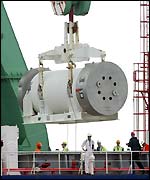
| | Tuesday, 17 September, 2002, 17:05 GMT 18:05 UK Nuclear cargo back at Sellafield 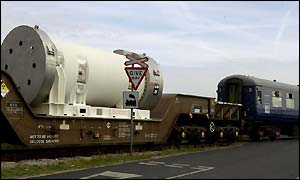 The Mox cargo was taken by train to Sellafield Containers of radioactive plutonium fuel, which were rejected by Japan, have arrived back at the Sellafield nuclear plant. Armed police watched as five tons of plutonium mixed oxide fuel (MOX) were lifted by a crane off the nuclear freighter Pacific Pintail, docked in Barrow-in-Furness, on to a waiting train. The freight train and its cargo arrived at Sellafield on Tuesday afternoon at the end of its controversial 36,000-mile round trip. It is due to be unloaded on Tuesday night or Wednesday morning.
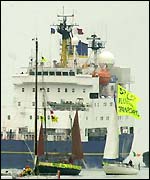
BNFL's Chief Executive Norman Askew said: "The safe and secure delivery of this fuel is a very important milestone for BNFL and our customers. "This now draws a line under the Mox quality assurance issue. "I promised our Japanese customers that we would return the fuel in 2002 and we have now delivered on that promise." The BNFL-owned vessel docked at the Marine Terminal in Cumbria about 0800 BST on Tuesday. Her sister ship, the Pacific Teal, which is not thought to be carrying any fuel, is due to dock at the same port on Tuesday evening's high tide. Nuclear weapons Both ships have completed a journey which began when they left Takahama in Japan in July en route for the Cumbrian port. Casks containing the fuel were bolted down in the ship and the vessels themselves were specially designed to withstand collision and remain buoyant. As the Pacific Pintail entered the final stretch of Walney Channel before reaching the port, she was followed by a flotilla of protesting boats. Protesters from the environment group Greenpeace claim there is enough plutonium within the ship's cargo of fuel to make 50 nuclear weapons - an argument rejected by BNFL.
The nuclear shipments are said to have been condemned by 80 governments who denied the convoy access to waters around their countries, according to Greenpeace. Navy vessels and spotter aircraft were also deployed by the Irish Government to monitor the BNFL ships as they sailed off the Irish coast. A spokesman for BNFL said the countries were entitled to their opinions, but much of the concern stemmed from a misunderstanding over the risk from the fuel. The fuel was originally shipped to Japan in 1999 for Japan's largest nuclear company. Kansai Electric Power Company's Takahama nuclear generating facility wanted to load it into a reactor to generate electricity. Both the fuel was returned by Japan after BNFL admitted quality checks on the width of the nuclear pellets were falsified by five staff at its old testing facility at Sellafield.
Once the fuel has been unloaded from the train, it will be stored in a specially-designed facility until BNFL is given the go-ahead for recycling it into new fuel. A Greenpeace spokesman said the demonstration had been a success. "Today is a final humiliation for BNFL after a three year, 36,000 mile round trip. "Its reject plutonium is now back where it started. "In the course of the journey, BNFL has taken great risks with environmental safety, ignored the protests of 80 countries around the world and outraged public opinion on four continents. "It seems that the only thing they are good at is offending people." Low risk Admiral Sir Sandy Woodward, an independent spokesman on the security surrounding the transport of nuclear cargo, said BNFL had gone far beyond what was required in terms of making sure the shipment was safe. He said: "They have not just met government guidelines, they have exceeded them. "The materials they are carrying are not of much interest to the likes of Saddam Hussein. "There are much easier targets for him to go for. "You would have to put a bloody big bomb under that ship to make anything come out of it. "There is not much risk there." | |
  See also: 17 Sep 02 | UK 17 Sep 02 | England 13 Sep 02 | UK 14 Sep 02 | Wales 13 Sep 02 | Wales 12 Sep 02 | England 05 Jul 02 | England 11 Jul 00 | UK Internet links: The BBC is not responsible for the content of external internet sites Top England stories now: Links to more England stories are at the foot of the page. | ||||||||||||||||||||||||||||||||||||||||||||||||||||||||||||||||||||||||||||||||||||||||||||||||||||||||||||||||||||||||
| |
|  E-mail this story to a friend E-mail this story to a friend |
| |
| Links to more England stories |
| | | ||
 | ||||
 | | Back to top
| ||
| ---------------------------------------------------------------------------------- To BBC Sport>> | To BBC Weather>> | To BBC World Service>> ---------------------------------------------------------------------------------- © MMIII | News Sources | Privacy |