|
 |
 | | | | | | ||||||||||||||||||||||||||||||||||||||||||||||||||||||||||||||||||||||||||||||||||||||||||||||||||||||||||||||||||||||||||||||||
| | | You are in: UK: Wales | ||||||||||||||||||||||||||||||||||||||||||||||||||||||||||||||||||||||||||||||||||||||||||||||||||||||||||||||||||||||||||||||||||
|
| | Friday, 13 September, 2002, 11:58 GMT 12:58 UK Greenpeace target nuclear waste ships 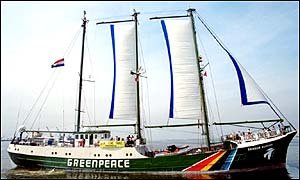 The Rainbow Warrior is to lead the protest flotilla An anti-nuclear flotilla is assembling at a north Wales port before it attempts to intercept a shipment of radioactive fuel due to pass through the Irish Sea. The flotilla is being led by environmental campaigners Greenpeace's flagship vessel, the Rainbow Warrior, and includes vessels from Wales and Ireland.
Rainbow Warrior anchored at Holyhead on Thursday night as campaigners worked out how the flotilla should confront two armed merchant ships en-route from Japan to Barrow in Cumbria. The ships are part of a purpose-built fleet on a voyage carrying more than 200 kilos of mixed oxide nuclear fuel destined for British Nuclear Fuels Ltd (BNFL) at the Sellafield reprocessing plant. The cargo has been sent back from Takahama in Japan after safety records at Sellafield, which is operated by BNFL, were exposed as false in 1999. Up to 20 vessels are due to assemble in Holyhead for the protest, which could take place late on Sunday or early next week. But Greenpeace campaigners said they do not plan to interfere with the vessels' safe navigation.
Greenpeace claims the ships are carrying enough plutonium waste to make 50 nuclear bombs, which make them a potential target for terrorists. BNFL denies this claim, insisting its cargo includes low-grade plutonium which would be of no use to terrorists. Greenpeace publicity officer Mhairi Dunlop said: "This shipment represents an industry which is not only financially, but morally, bankrupt. "We will make sure that the ships, BNFL and the UK Government hear us loud and clear, the Irish Sea must not be a nuclear dumping ground nor a nuclear highway." On Tuesday, Greenpeace confirmed the location of the two plutonium ships, the Pacific Pintail and Teal, off the west coast of Madeira, in international waters.
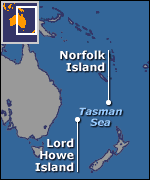
The vessels have already faced protests by a 50-strong flotilla in the Tasman Sea between Australia and New Zealand after setting out from Japan on 4 July. Greenpeace said the protest was largely a symbolic one, and that it never expected the ships to stop. Mixed-oxide fuel is made by reprocessing spent uranium fuel rods from nuclear plants. The Sellafield plant separates the rods' plutonium radioactive waste from the remaining unused uranium. Recycled uranium and plutonium is made into ceramic pellets which can be used again in a nuclear power plant. BNFL said one fingernail-sized pellet could generate as much energy as a ton of coal. | |
See also:  13 Sep 02 | UK 12 Sep 02 | England 05 Jul 02 | England 22 Jul 02 | Asia-Pacific 04 Jul 02 | UK 12 Jun 02 | UK Internet links: The BBC is not responsible for the content of external internet sites Top Wales stories now: Links to more Wales stories are at the foot of the page. | ||||||||||||||||||||||||||||||||||||||||||||||||||||||||||||||||||||||||||||||||||||||||||||||||||||||||||||||||||||||||||||||||
| |
|  E-mail this story to a friend E-mail this story to a friend |
| |
| Links to more Wales stories |
| | | ||
 | ||||
 | | Back to top
| ||
| ---------------------------------------------------------------------------------- To BBC Sport>> | To BBC Weather>> | To BBC World Service>> ---------------------------------------------------------------------------------- © MMIII | News Sources | Privacy |