|
 |
 | | | | | | |||||||||||||||||||||||||||||||||||||||||||||||||||||||||||||||||||||||||||||||||||||||||||||||||||||||||||||||||||||||||||||||||||||
| | | You are in: UK: England | |||||||||||||||||||||||||||||||||||||||||||||||||||||||||||||||||||||||||||||||||||||||||||||||||||||||||||||||||||||||||||||||||||||||
|
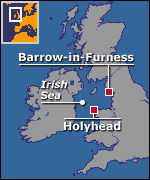
| | Tuesday, 17 September, 2002, 16:46 GMT 17:46 UK Protests as nuclear cargo returns 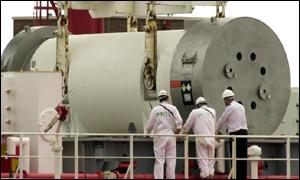 The Mox shipment was rejected by Japan Anti-nuclear campaigners have dubbed the return of radioactive waste to Britain a "degrading spectacle". Two heavily guarded ships, flanked by police, returned the plutonium mixed oxide fuel (Mox) to Barrow-in-Furness in Cumbria from Japan, where it was rejected three years ago. It was later taken by train to the Sellafield processing plant. About six boats of environmental protesters greeted the Pacific Pintail and Pacific Teal ships with a "visual protest" as they approached the specially constructed docks complex. Greenpeace claimed there was enough plutonium on board the ships to make 50 nuclear weapons if they had fallen into terrorist hands.
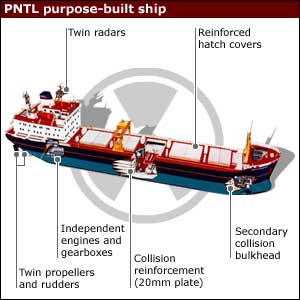
BNFL head of transport Malcolm Miller told the BBC: "The material we're carrying is uranium fuel with a small percentage of plutonium within it. "It hasn't been in a reactor so it's not particularly radioactive at all. It's a hard ceramic pellet material which is insoluble in water, so we consider it to be a safe transport." Campaigners from Cumbrians Opposed to a Radioactive Environment (Core) criticised the scene at Barrow. Martin Ford from Core said: "This is a degrading spectacle for the town of Barrow. "I hope the general public here will question the necessity of having to go through this. "More importantly, we want to know who is going to pay for this massive security operation." Click here to see the structure of the ships Very few people turned up to protest on land, although one man was arrested after gaining entry to a media site set up near the Barrow dock. Other local residents, such as Paul Smith, 44, from Barrow, said the nuclear shipments did not bother them. "Everybody has got a right to protest haven't they? But it's [BNFL] keeping 10,000 people in a job at Sellafield for another five or 10 years," said Mr Smith. The five tonnes of Mox was returned to Sellafield after it was rejected by Japan in 1999. Japan's largest nuclear company Tokyo Electric refused the consignment after BNFL admitted quality checks on the width of nuclear pellets was falsified by five staff at its Sellafield testing facility. BNFL was then forced to arrange for the controversial return transportation of the radioactive fuel. According to Greenpeace, the nuclear shipments have been condemned by 80 governments who denied the vessels access to waters around their countries. The fuel, which is contained in a single white armoured flask, will be taken off the freight train later on Tuesday or Wednesday. It will be stored at Sellafield until officials give the go-ahead for recycling it into new fuel. | |
  See also: 17 Sep 02 | England 13 Sep 02 | UK 14 Sep 02 | Wales 13 Sep 02 | Wales 12 Sep 02 | England 05 Jul 02 | England 11 Jul 00 | UK Internet links: The BBC is not responsible for the content of external internet sites Top England stories now: Links to more England stories are at the foot of the page. | |||||||||||||||||||||||||||||||||||||||||||||||||||||||||||||||||||||||||||||||||||||||||||||||||||||||||||||||||||||||||||||||||||||
| |
|  E-mail this story to a friend E-mail this story to a friend |
| |
| Links to more England stories |
| | | ||
 | ||||
 | | Back to top
| ||
| ---------------------------------------------------------------------------------- To BBC Sport>> | To BBC Weather>> | To BBC World Service>> ---------------------------------------------------------------------------------- © MMIII | News Sources | Privacy |