
|
 |
 | | | | | | |||||||||||||||||||||||||||||||||||||||||||||||||||||||||||||||||||||||||||||||||||||||||||||||||
| | | You are in: UK: England | |||||||||||||||||||||||||||||||||||||||||||||||||||||||||||||||||||||||||||||||||||||||||||||||||||
|
| | Thursday, 18 July, 2002, 18:39 GMT 19:39 UK Crash investigators' arduous task 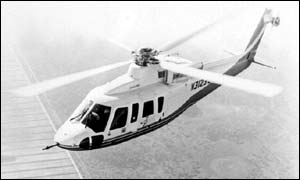 The North Sea crash wreckage has not yet been found
Despite their understandable frustration, the team will first have to wait until the wreckage of the Sikorsky S-76, owned by Bristow Helicopters, is actually found. They will then begin the recovery operation from about 30 metres of water.
They also need to ensure that as little additional damage as possible is caused to the structure. The helicopter, which crashed while ferrying staff from the Shell/Esso-operated Clipper to the Global Santa Fe Monarch drilling rig, is being hunted by vessels equipped with sonar equipment. This kit is capable of "homing" on the Dukane beacons carried as standard by all support helicopters operating in the UK. Currently it is uncertain just how many of these "pingers" were installed in this particular helicopter, but one will be fitted as standard to the cockpit voice/flight data recorder package (the "black box", which is in fact painted bright orange). Strong currents If the crash has claimed the lives of all 11 occupants, survivor evidence is denied to the investigators. However, they will have taken detailed statements from the several offshore workers who saw the crash.
But apart from the obvious need to recover the remaining occupants, an inability to salvage the remains of the aircraft will leave many unacceptable uncertainties. The helicopter is at a relatively shallow water depth, but this is subject to strong currents and, twice-daily, to a two to two-and-a-half metre tidal range. Considerable difficulties could also stem from the unstable nature of the sea bed. Previous crash The shifting sands off the East Anglian coast have claimed far more than their fair share of mariners and their vessels over the years. Safe navigation is a product of the kind of extensive local maritime knowledge and experience garnered by lifeboatmen, fishermen and others.
Due to a reported initial unwillingness by senior civil servants to authorise the charter of a suitable salvage ship, the wreck was beyond recovery by the time the operation began. As a result the reason for this tragedy and its loss of 13 lives remains a mystery to this day. Well-equipped Given the kind of sophisticated underwater technology carried on board the diving support vessel Mayo, which will be used for the salvage operation, and the expertise of her specialist crew members, some, at least, of these difficulties should be minimised.
It carries a wide range of equipment for which the relatively shallow depths of the crash area is almost "over-engineered". This ranges from various types of remotely-controlled underwater cameras and mini-submarines, through some of the world's most experienced divers, decompression chambers and supporting medical equipment, lifting tackle and cranes. However, until the helicopter's remains are actually located all this material will be to no avail. And it may be that the unpredictable characteristics of the seabed offshore East Anglia will once more live down to their evil reputation. | |   See also: 18 Jul 02 | England 18 Jul 02 | England 17 Jul 02 | Scotland 17 Jul 02 | England 17 Jul 02 | UK 17 Jul 02 | UK 16 Jul 02 | UK Internet links: The BBC is not responsible for the content of external internet sites Top England stories now: Links to more England stories are at the foot of the page. | |||||||||||||||||||||||||||||||||||||||||||||||||||||||||||||||||||||||||||||||||||||||||||||||||
| |
|  E-mail this story to a friend E-mail this story to a friend |
| |
| Links to more England stories |
| | | ||
 | ||||
 | | Back to top
| ||
| ---------------------------------------------------------------------------------- To BBC Sport>> | To BBC Weather>> | To BBC World Service>> ---------------------------------------------------------------------------------- © MMIII | News Sources | Privacy |






