
|
 |
 | | | | | | ||||||||||||||||||||||||||||||||||||||||||||||||||||||||||||||||||||||||||||||||||||||||
| | | You are in: UK | ||||||||||||||||||||||||||||||||||||||||||||||||||||||||||||||||||||||||||||||||||||||||||
|
| | Tuesday, 16 July, 2002, 23:28 GMT 00:28 UK Crew 'trained for survival' 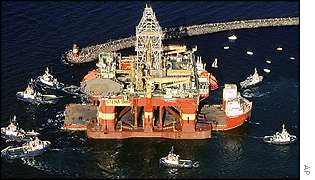 Rig workers know evacuation techniques Experts say the crew and passengers of a civilian helicopter that crashed in the North Sea, leaving five people dead and six missing, would have been trained in survival techniques. A huge search and rescue operation is underway after the Sikorsky S76 ditched in the North Sea off the Norfolk coast on Tuesday night.
Maritime expert Jim Ferguson said that their chances of survival would depend on the circumstances of the crash. "It depends very much on the nature of this incident, how hard it hit the water, whether it remained afloat, whether it turned over," he told BBC News. Safety equipment But he confirmed that the search would be made easier because of safety equipment on board.
The aircraft would have been fitted with a beacon, although it was unclear at this stage whether a distress call had been made. And the helicopter would have had at least one life raft on board. The aviation writer from Aberdeen said the Sikorsky S76 had a good safety record. There had only been two accidents involving Sikorskys, of which one was down to pilot error, in recent years. 'Mechanical failure' Another maritime expert, Chris Yates, said that nothing could be ruled out yet to explain the crash. But given the very good weather conditions - the Met Office said there were only light winds and temperatures at around 15C in the area at the time - it was most likely that it was down to "some form of mechanical failure". He said this sort of helicopter was the "work-horse" of the North Sea fleet and was very well maintained to operate in harsh conditions. Though there had been accidents in the past, the helicopters had a "terrific safety record." Survival drills Jeff Regan, a former offshore manager, said the crew and passengers would have been well versed in evacuation techniques. But, pointing out the circumstances of the crash were so far unknown, he went on: "They may have had little warning for crews and passengers to adopt emergency procedures and bracing for impact. "However, it is the type of thing that all offshore workers, certainly in the UK and in the Norwegian sector, drill for regularly. "In the real situation that we hope will never happen they will know the techniques for escaping the helicopter in darkness, potentially under water, potentially submerged and potentially upside down. "This is all part of offshore emergency training". And he said that all passengers would be provided with immersion suits and would be wearing life jackets that would have to be inflated once they left the helicopter. They are fitted with lights that come on automatically once immersed in water. "You are trained to form a survival huddle to maximise body heat and maximise your chance of survival and to encourage all your partners to stay together," he said. | | See also:  16 Jul 02 | UK Internet links: The BBC is not responsible for the content of external internet sites Top UK stories now: Links to more UK stories are at the foot of the page. | ||||||||||||||||||||||||||||||||||||||||||||||||||||||||||||||||||||||||||||||||||||||||
| |
|  E-mail this story to a friend E-mail this story to a friend |
| |
| Links to more UK stories |
| | | ||
 | ||||
 | | Back to top
| ||
| ---------------------------------------------------------------------------------- To BBC Sport>> | To BBC Weather>> | To BBC World Service>> ---------------------------------------------------------------------------------- © MMIII | News Sources | Privacy |





