|
 |
 | | | | | | ||||||||||||||||||||||||||||||||||||||||||||||||||||||||||||||||||||||||||||||||||||||||||||||||||||||||||||||||||||||
| | | You are in: UK: England | ||||||||||||||||||||||||||||||||||||||||||||||||||||||||||||||||||||||||||||||||||||||||||||||||||||||||||||||||||||||||
|
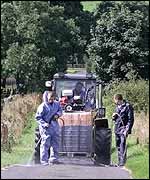
| | Friday, 21 June, 2002, 14:52 GMT 15:52 UK Report sheds light on disease crisis The army was called in too late to help with the crisis
Nine months after the end of the disastrous 2001 foot-and-mouth disease outbreak, the key criticisms of the way it was handled by the government are by now familiar. It's widely accepted that the Ministry of Agriculture, (MAFF) since replaced by the Department of the Environment, Food and Rural Affairs (Defra), took too long to call in the help of other agencies such as the army. This happened even when it was clear the disease was out of control, and the three-day delay in halting livestock movements after the initial outbreak on 19 February added significantly to the scale of the epidemic.
The most striking revelation in the 130-page report is that officials within MAFF recognised three years before the epidemic that they were ill-prepared to handle a major outbreak of foot-and-mouth disease, and that they failed to act adequately on those warnings. Flawed contingency plans Among the official papers uncovered by the NAO were the results of a review carried out in 1998 and 1999 by Richard Drummond, head of the Northern region of the State Veterinary Service, part of the ministry of agriculture, examining its preparedness to deal with animal disease outbreaks. It expressed concern about the contingency plan then in place which assumed that officials would only have to deal with an outbreak involving 10 farms. The report noted in February 1999: "With the speed at which foot-and-mouth disease might spread, the State Veterinary Service's resources could quickly become overwhelmed, particularly if a number of separate outbreaks occurred in separate locations at the same time". The Drummond review recommended a series of measures which should be put in place to improve Britain's readiness for a possible outbreak. Some of those were acted on, but in July 2000 the Chief Veterinary Officer Jim Scudamore privately expressed his concern that key issues had not been resolved. They included the arrangements for the slaughter and disposal of carcasses, the updating of existing contingency plans and scientific expertise to track the progress of the disease if it were to break out. The striking thing about this revelation is that these were the very areas which proved to be major weaknesses when foot-and-mouth disease struck for real six months later. Fraud allegations The NAO says if MAFF had responded properly to the weaknesses identified by its own officials, the impact of the disease and its costs could have been much lower. In its analysis of the handling of the outbreak itself, the NAO concludes that the government failed to keep control of the way in which public money was being spent. Especially in the first four months of the epidemic, the need to get work done quickly put officials in a poor negotiating position, and the costs both of compensating farmers and work from contractors escalated. The report reveals that a number of cases of suspected fraud are being investigated, including allegations involving four government officials. And there are still a large number of unresolved disputes over the prices charged by contractors.
The NAO recommends that in the event of a future crisis, cost and financial control should not fall below a minimum standard - clear procedures should be in place beforehand for the procurement of supplies and services, to avoid a repeat of last year's situation in which contracts involving large sums of money were often agreed on the telephone. This is not a report which uses extravagant language to attack the government, and it accepts that the sheer scale of the epidemic made many of these problems inevitable. Credit is also given to officials for "working punishingly long days in stressful and often distressing conditions." But the clear message which emerges is that the spiralling costs of the epidemic can be blamed on the failure to prepare beforehand for an emergency of this kind - and since it's now clear that the potential problems were forecast with remarkable accuracy by MAFF itself, the excuses for this failure look increasingly weak. | |  
See also: 21 Jun 02 | UK Politics 20 Jun 02 | UK Politics 21 Jun 02 | England 14 May 02 | England 17 Apr 02 | England 16 Apr 02 | UK Internet links: The BBC is not responsible for the content of external internet sites Top England stories now: Links to more England stories are at the foot of the page. | ||||||||||||||||||||||||||||||||||||||||||||||||||||||||||||||||||||||||||||||||||||||||||||||||||||||||||||||||||||||
| |
|  E-mail this story to a friend E-mail this story to a friend |
| |
| Links to more England stories |
| | | ||
 | ||||
 | | Back to top
| ||
| ---------------------------------------------------------------------------------- To BBC Sport>> | To BBC Weather>> | To BBC World Service>> ---------------------------------------------------------------------------------- © MMIII | News Sources | Privacy |