|
 |
 | | | | | | |||||||||||||||||||||||||||||||||||||||||||||||||||||||||||||||||||||||||||||||||||||
| | | You are in: UK: Education | |||||||||||||||||||||||||||||||||||||||||||||||||||||||||||||||||||||||||||||||||||||||
|
| | Tuesday, 5 November, 2002, 16:20 GMT Class size battle in Florida 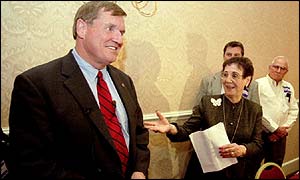 Bill McBride wants to cut infant class sizes Reducing class sizes, increasing private sector involvement in state education, tackling teacher shortages - these are issues familiar to political disputes over education in the United Kingdom. But they are also to be found in the battle for the governship of Florida in the United States. The Democrat challenger, Bill McBride, has promised $300m to reduce class sizes, targeted at the early years of primary school. This will be familiar territory to educationalists in the United Kingdom, where the Labour party's 1997 election victory brought in limits on class sizes for five, six and seven year olds.
But the Republican incumbent, Governor Jeb Bush, and brother of the president, also says that education is a priority. And Governor Bush has advocated higher funding linked to greater accountability. His Democrat opponent has also highlighted the state's teacher shortage - and has promised to tackle this with a pay hike for teachers. Bill McBride has promised an increase of $2,500 to bring the average teachers' salary to $40,300. This is intended to address shortages which particularly affect certain subjects, including maths, science and modern languages. School vouchers The Democrats' $1bn plan for education also includes an improvement in pre-school provision, another mainstay of Labour's policy in the United Kingdom. More than half of this extra spending would be raised by an additional levy on cigarettes. In response, the Republicans say that they too see education as a key battleground. Governor Bush has claimed success with a scheme that gives financial rewards to schools which improve grades. Since 1999, this bonus of $100 per pupil has accounted for over $300m of extra funding, says the Bush campaign. The importance of literacy skills has been emphasised by Governor Jeb Bush, who says that $57m is committed to ensure that every child reads at an appropriate level by 2012. And his re-election campaign has highlighted improvements in test results for reading skills. Governor Bush's campaign also defends its spending record, claiming that it has increased school funding by 27% since 1998. Another area of dispute between the two parties is school vouchers, which provide state funds for parents to spend on private education. The "opportunity scholarships" promoted by Republicans gives parents funds for private schools, if a state school attended by their children receives a failing grade for two consecutive years. But such schemes would fall out of favour if Democrats are victorious in the electoral battle. | | See also:  05 Nov 02 | Americas 07 Aug 02 | Education 28 Jun 02 | Americas Internet links: The BBC is not responsible for the content of external internet sites Top Education stories now: Links to more Education stories are at the foot of the page. | |||||||||||||||||||||||||||||||||||||||||||||||||||||||||||||||||||||||||||||||||||||
| |
|  E-mail this story to a friend E-mail this story to a friend |
| |
| Links to more Education stories |
| | | ||
 | ||||
 | | Back to top
| ||
| ---------------------------------------------------------------------------------- To BBC Sport>> | To BBC Weather>> | To BBC World Service>> ---------------------------------------------------------------------------------- © MMIII | News Sources | Privacy |