
|
 |
 | | | | | | ||||||||||||||||||||||||||||||||||||||||||||||||||||||||||||||||||||||||||||||||||||||
| | | You are in: UK: Education | ||||||||||||||||||||||||||||||||||||||||||||||||||||||||||||||||||||||||||||||||||||||||
|
| | Monday, 4 November, 2002, 00:22 GMT Call for Arabic lessons in schools 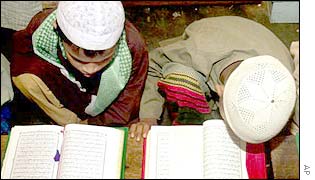 Lessons in after-school classes are unregulated Muslim children in the UK would be better able to argue against radicalism and might also do better in their schooling if schools offered them Arabic lessons, a report argues. The report, published by the Open Society Institute, also says anti-discrimination laws need to be changed so they also focus on religion, because of the problems faced by Muslims. The report's author, Durham law lecturer Tufyal Choudhury, says that for young Muslims, the education system is the earliest and most significant point of contact with the wider community.
The vast majority are educated in non-Muslim, state schools. "Successful integration requires such schools to change to meet the legitimate expectations of Muslims," he says. "Schools should, as far as possible, accommodate the religious needs of pupils." Mosque classes But there is also the potential to find ways in which "faith identities" can be harnessed to improve educational standards among Muslim pupils. "For example, Arabic, which many Muslim pupils learn outside school, could be offered as a foreign language option alongside modern European languages." "Many Muslim children will learn to read Arabic in order to read the Koran. But the quality of the language tuition is unregulated. "With limited time and resources at their disposal, mosques are often able to impart only basic knowledge of Arabic and Islam." He says such after-school classes "have not delivered". 'Ill-equipped' So young people complete their education knowing they are Muslim but with little understanding of Islam. This creates a gap which groups with differing "and perhaps more radical" interpretations of Islam can fill. "Without adequate education, young Muslims are ill-equipped to engage in debate and dialogue with such groups." But also the after-school classes can affect the time they can devote to school homework. Learning Arabic in school would not represent an extra burden for those who already were learning it in after-school classes. "Teaching the Arabic language in schools would in fact ensure a better balance in the overall educational burden placed on Muslim pupils and contribute towards improving achievement levels." The report is part of the minority protection report from the European Union Accession Monitoring Programme. | |    See also: 16 Oct 02 | Business 16 Sep 02 | UK 18 Sep 01 | Education Internet links: The BBC is not responsible for the content of external internet sites Top Education stories now: Links to more Education stories are at the foot of the page. | ||||||||||||||||||||||||||||||||||||||||||||||||||||||||||||||||||||||||||||||||||||||
| |
|  E-mail this story to a friend E-mail this story to a friend |
| |
| Links to more Education stories |
| | | ||
 | ||||
 | | Back to top
| ||
| ---------------------------------------------------------------------------------- To BBC Sport>> | To BBC Weather>> | To BBC World Service>> ---------------------------------------------------------------------------------- © MMIII | News Sources | Privacy |





