|
 |
 | | | | | | ||||||||||||||||||||||||||||||||||||||||||||||||||||||||||||||||||||||||||||||||||||||||||||||||||||||||||||||||||||||||||
| | | You are in: UK: Education | ||||||||||||||||||||||||||||||||||||||||||||||||||||||||||||||||||||||||||||||||||||||||||||||||||||||||||||||||||||||||||||
|
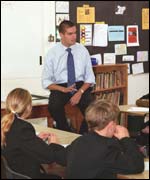
| | Friday, 11 October, 2002, 18:38 GMT 19:38 UK Faces of education 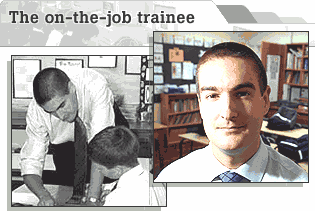 Rich Peters gave up a well-paid career in accountancy to become a teacher. He is one of the new breed of teachers who are being trained "on the job," in a school, rather than at university. He works in Hertfordshire. In July this year, I walked away from a successful career in Islington: a career where I was in control and respected both by clients and colleagues. I abandoned my safe, warm environment, along with 75% of my remuneration package, and pursued my lifetime's goal: to become a secondary school English teacher. "But why?" was the cry of some friends and family. I may have a reputation for eccentricity, but this was clearly going one step too far. Why would anyone with an established career embark on a journey that must inevitably end in tears? This was not a hasty decision. I had always enjoyed the learning environment but, after completing a law degree, was not convinced that I had the confidence to enter the classroom.
I trained as a chartered accountant and later went on to training graduates in accountancy. Over five years, the London salary rocketed, as did the responsibility, but something was gnawing at my conscience, a general sense of unease. I was good at what I was doing, and I was comfortable: but wasn't that the problem? The students in my classroom had already made it in life; they were successful graduates who were already on the road to prosperity before I even began to train them. I felt uncomfortable that I was merely helping the well educated to become even more so, and that somewhere earlier up the chain there were others less fortunate who might need assistance. And while I was well paid, I had become the very image of my most despised beings: a downtrodden commuter, avoiding eye-contact with the fellow-travellers, whose home town was a place to sleep rather than a community to which he could contribute. With my social conscience newly rediscovered, it was time to find a route into teaching. A word to anyone considering this: you need to be persistent! It has taken me a year to implement my career change: whilst the country is crying-out for competent teachers, the admissions process is laborious.
But through both processes I suffered initial rejection by computer systems that no-one questioned, invitations for interview that arrived after the date, for the wrong course and a different person, as well as long periods of total silence. Despair set in as I began to consider whether this was a prelude for worse to come. Then I arranged to do a week's observation at Sandringham School in St Albans and was reminded of the reasons why teaching had seemed attractive. Fantastic From day one the staff were enthusiastic, astounded by my change of career but supportive. By the third day they had arranged for me to teach an A-level class, and by day four they were interviewing me to join them on the Graduate Trainee Programme (GTP). Another tip to anyone considering moving into teaching: the GTP scheme is fantastic! Instead of being a university student who is seconded to various schools for weeks at a time, the programme means you are employed directly by the school (or local education authority) from day one. The theoretical aspects of teaching are learned through seminars at the local college once a week. It enables you to get to grips with classes - your classes - right from the start of the year. Through mentoring, regular assessment of your lessons and lengthy paperwork, within a year you still gain your qualification if all goes well. Goals The biggest challenge for me in the next year must be to qualify: to achieve effective classroom management, and provide an environment in which the students are learning in as enjoyable a manner as possible. The first classes have gone well, and the students are entertaining. The staff are a very progressive-thinking team, investing heavily in training because they know that ultimately it will benefit everyone. In fact, they are a team in every sense of the word, with little of the usual backbiting and whingeing that is often associated with this profession. And that is what I explain to my critics who still cannot understand my move: I am a member of a professional team that is committed to providing education to the local community. What could be more rewarding? Disclaimer: The BBC will put up as many of your comments as possible but we cannot guarantee that all e-mails will be published. The BBC reserves the right to edit comments that are published. | |
Internet links:  The BBC is not responsible for the content of external internet sites Top Education stories now: Links to more Education stories are at the foot of the page. | ||||||||||||||||||||||||||||||||||||||||||||||||||||||||||||||||||||||||||||||||||||||||||||||||||||||||||||||||||||||||||
| |
|  E-mail this story to a friend E-mail this story to a friend |
| |
| Links to more Education stories |
| | | ||
 | ||||
 | | Back to top
| ||
| ---------------------------------------------------------------------------------- To BBC Sport>> | To BBC Weather>> | To BBC World Service>> ---------------------------------------------------------------------------------- © MMIII | News Sources | Privacy |