|
 |
 | | | | | | |||||||||||||||||||||||||||||||||||||||||||||||||||||||||||||||||||||||||||||||||||||||||||||||||||||||||||||||||||||||||||
| | | You are in: UK: Education | |||||||||||||||||||||||||||||||||||||||||||||||||||||||||||||||||||||||||||||||||||||||||||||||||||||||||||||||||||||||||||||
|
| | Friday, 11 October, 2002, 18:42 GMT 19:42 UK Faces of education 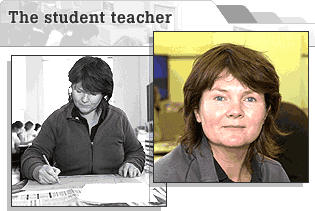 Leaving behind a long career as a radio journalist, Catherine Harney is on a post-graduate course to train as a teacher. She says 11 September proved to be a turning point in her life. After 14 years as a journalist with the BBC I find myself on a flexible entry Postgraduate Certificate in Education (PGCE) course aimed at preparing me to work as a primary school teacher in inner London. As part of the government's campaign to recruit teachers more quickly a number of universities now offer entry three times a year. I started in April 2002 and will finish next March, because I just want to get on with it.
The general consensus among my fellow students though seems to be, get me qualified as soon as possible. Most admit that if the �6,000 bursary were not available then they would not be able to afford to become teachers. My passage onto a PGCE course was not altogether smooth. I foolishly thought with my years as a journalist I would be welcomed with open arms but the Teacher Training Agency admits that some university courses still penalise those without degrees in subjects like English and maths. In the end I am part of an intake which I believe has a greater diversity of useful experience and I am glad I was not accepted onto one of the more high profile courses. Not delving into anyone's financial situation, I would say that up to half the class, including myself, have taken a big pay cut to enter teaching.
Some have obvious business brains and see themselves as taking an active part in managing the school budget. I would be lying if I did not admit that being in charge of news summaries on September 11 didn't make me feel pride but somehow the planes hitting the World Trade Centre spurred me on to make a decision on something that had been in my head for years. If our intake is to be taken into consideration then the signs are good for the government's plans for education. Around 25% of the class are men, although it has to be said that none have expressed an interest in early years education.
There are two actors in the class who certainly command a presence while another two represented Britain at the Commonwealth and Olympic games. The stereotypical mousy primary school teacher hasn't been my experience either on the course or in schools. Steep hill After five weeks in the classroom, I was launched into a challenging primary on the borders of the City of London. There was a stark contrast between the poverty of the school's intake and the money in the City. The teachers, though in amazingly good spirits, found it hard to be positive about pupils. It was brought home to me how some schools have a much steeper hill to climb than others. Certainly, so far, I have found coming to teaching late a good experience. I know that I am a thousand times more confident than when I came out with my degree in the mid-80s. Indeed the tutor who came to assess me at school talked to me for half an hour before he realised I was not a teacher at the school. Over a five-week teaching block, the children did not give me too hard a time but getting to grips with the national curriculum, planning lessons and keeping on top of assignments did take its toll on me and my family. At least I had the summer to recuperate. Now it is back to school with no let up until March. Disclaimer: The BBC will put up as many of your comments as possible but we cannot guarantee that all e-mails will be published. The BBC reserves the right to edit comments that are published. | |
Internet links:  The BBC is not responsible for the content of external internet sites Top Education stories now: Links to more Education stories are at the foot of the page. | |||||||||||||||||||||||||||||||||||||||||||||||||||||||||||||||||||||||||||||||||||||||||||||||||||||||||||||||||||||||||||
| |
|  E-mail this story to a friend E-mail this story to a friend |
| |
| Links to more Education stories |
| | | ||
 | ||||
 | | Back to top
| ||
| ---------------------------------------------------------------------------------- To BBC Sport>> | To BBC Weather>> | To BBC World Service>> ---------------------------------------------------------------------------------- © MMIII | News Sources | Privacy |