|
 |
 | | | | | | ||||||||||||||||||||||||||||||||||||||||||||||||||||||||||||||||||||||||||||||||||||||||||||||||||||||||||||||||||||||||||||||||||||||||||||||||||||||||||||||||||||||||
| | | You are in: UK: Education | ||||||||||||||||||||||||||||||||||||||||||||||||||||||||||||||||||||||||||||||||||||||||||||||||||||||||||||||||||||||||||||||||||||||||||||||||||||||||||||||||||||||||||
|
| | Thursday, 15 August, 2002, 15:33 GMT 16:33 UK A-level rush for university places 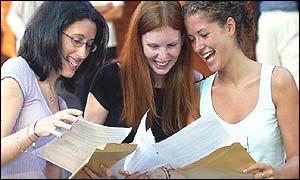 Girls have increased the A-level "gender gap" over boys University places are filling up fast as A-level results reach a record high. The pass rate for this year's quarter of a million students has shot up by 4.5 percentage points, to 94.3%.
The good results mean most students will have gained the required grades for a place at university and competition for any remaining places is likley to be fierce. Figures published by the Universities and Colleges Admissions Service (Ucas) show the number of accepted applicants for this year was up 5,685 - at 226,794 - on last year. And two years ago, the number of accepted applicants at this point was just 192,140. Results rise The unprecedented one-year rise in exam results follows the first major overhaul of A-levels since their introduction 51 years ago. The proportion of A grades was also up, from 18.6% to 20.7%. The higher pass rate has already drawn the familiar criticism that the exams must be getting easier. But exam chiefs insist standards are being maintained.They talk of "driving failure out of the system" - and are predicting a 100% pass rate within a few years. The Welsh exam board, WJEC, is ahead of the game: 98.2% of its entries passed. But Chris Woodhead, former chief inspector of English schools watchdog, Ofsted, said the prospect that every student might pass made a mockery of the idea of exams to differentiate between pupils. 'AS effect' Overall there was a drop this year of more than 6% in the number of A-level entries, from 748,866 to 701,380. The rising pass rate and the fall in entries are attributed to the "AS effect" - with weaker candidates being weeded out under the new system and not carrying on to do a full A-level.
The net effect is that about the same number of A-levels have been awarded. However, school and college principals said many universities were now accepting a mixture of A and AS-levels in their selection criteria. The number of AS-level entries has gone up by a quarter, from 794,117 last year - the first year they were taken - to 995,404. Growing gender gap The AS-level pass rate was almost unchanged: 86.5% compared with 86.6% in 2001. The A-level "gender gap" has accelerated, with 95.4% of girls passing and 93% of boys - a difference of 2.4 points, up from 1.9 last year. The Vocational A-levels attracted 32,246 entries - being new, there are no equivalent figures for last year. The pass rate was 78.7%. For boys it was 74% and for girls, 83% - a nine point difference. The figures are for England, Wales and Northern Ireland and are provisional - they could change slightly as a result of late entries and appeals. Students get their individual results on Thursday. The school-by-school "league tables" are issued towards the end of the year.
The overview of the results was issued on behalf of the exam boards by the Joint Council for General Qualifications. Its convenor, John Milner, said this was "a fascinating year" with "the most exciting and important change since the A-level was introduced in 1951". "Standards are being maintained and achievements are rising," he stressed. Officials at the exams watchdog, the Qualifications and Curriculum Authority (QCA), have said they can foresee the pass rate reaching 100% within two or three years. Review The head of the QCA, Sir William Stubbs, said: "All those who have passed have achieved an award of lasting value. "Anyone who thinks passing an A-level - general or vocational - is easy is simply out of touch." He added: "We will be reviewing this year's examinations outcomes overall and reporting to ministers in the autumn. "We will consider whether fine-tuning is needed and look at further ways to ease the burden on schools and teachers while maintaining standards." 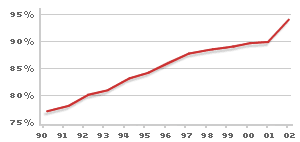 Numbers achieving all grades, A to E | |
See also:  15 Aug 02 | Education Internet links: The BBC is not responsible for the content of external internet sites Top Education stories now: Links to more Education stories are at the foot of the page. | ||||||||||||||||||||||||||||||||||||||||||||||||||||||||||||||||||||||||||||||||||||||||||||||||||||||||||||||||||||||||||||||||||||||||||||||||||||||||||||||||||||||||
| |
|  E-mail this story to a friend E-mail this story to a friend |
| |
| Links to more Education stories |
| | | ||
 | ||||
 | | Back to top
| ||
| ---------------------------------------------------------------------------------- To BBC Sport>> | To BBC Weather>> | To BBC World Service>> ---------------------------------------------------------------------------------- © MMIII | News Sources | Privacy |