
|
 |
 | | | | | ||||||||||||||||||||||||||||||||||
| | You are in: Education: Features | ||||||||||||||||||||||||||||||||||||
 | | Wednesday, 27 February, 2002, 08:38 GMT Middle East peace drama 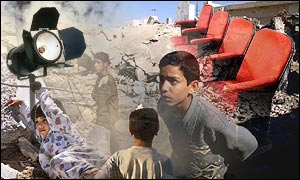 Drama and music are used to heal the wounds of a divided community As tension in Israel and the occupied territories continues to mount, groups of young Arab and Jewish students have taken to the stage in the hope of creating a brighter future. Peace Child Israel brings teenagers from different schools together for drama workshops and performances. The director of the "co-existence" project, Melisse Lewine-Boskovich, explained the aim to BBC World Service's Everywoman programme. "We are committed to making some sort of better future, or at least giving the kids an opportunity to finding a better future," she said. "This is a sign that there are still people not ready to throw in the towel yet." Workshops Operating at a time of intense conflict, when many co-existence projects appear to be faltering, Peace Child Israel is thriving. Eight new workshops have started this school year. Each aims to bring together communities and at the heart of the venture is the desire "to educate Arab and Jewish teenagers towards pluralism, tolerance and the creation of dialogue in a multicultural society, using drama as a tool."
Each group has 20 or 30 participants. Before a single word has been written or the actors have met, the groups work separately in preparation for dealing with issues of identity and their expectations of working with the other groups. "As a minority, Palestinian or Arab kids need to feel a little bit more confident in their cultural identity to be able to equally interact with their Jewish counterparts," Ms Boskovich said. Meanwhile, the project also recognises how some of the Jewish participants feel that they need to come to terms with their own history. As Ms Boskovich explains, there is a need for a sense of "empowerment to deal with a sense of collective responsibility and yet not feel that they are expected to commit cultural suicide." Awareness Peace Child Israel is an organic project and discussions are needed throughout the year to address the new issues arising from the conflict. During the 2001-2002 cycle, parents of workshop participants are also being invited to join in the year-long process. Their involvement includes an initial unilateral meeting to address the needs of the group and a mid-term meeting where the two groups meet to share their views. The aim of the parental meetings is to raise awareness before the two groups meet to watch their children's final performance. But can such a dramatic culture really help to break the deadlock that currently grips the Middle East? According to the group's leaders, by raising the communities awareness of each other they are already on the pathway to a brighter future. Ms Boskovich said: "If we keep providing opportunities for teenagers and kids to have a heightened awareness about the group's narratives, their pain and their perspectives, there is a possibility for a future shift." | |
See also:  Internet links: The BBC is not responsible for the content of external internet sites Top Features stories now:  Links to more Features stories are at the foot of the page. | ||||||||||||||||||||||||||||||||||
|
Links to more Features stories |
 | | ^^ Back to top News Front Page | World | UK | UK Politics | Business | Sci/Tech | Health | Education | Entertainment | Talking Point | In Depth | AudioVideo ---------------------------------------------------------------------------------- To BBC Sport>> | To BBC Weather>> ---------------------------------------------------------------------------------- © MMIII|News Sources|Privacy  |


 E-mail this story to a friend