 | |
|  |
By Christian Wolmar
Transport writer |
 |
|
The fuss over London's congestion charge is a storm in a teacup, whipped up by a hostile press, says Christian Wolmar. Former mayoral candidate Steve Norris disagrees. If the more lurid headlines are to be believed, the first day of the congestion charge will go down as the day Londoners lost their freedom to move. The event has been marked by more prophecies of doom than Cassandra ever managed.
So far reporting has, inevitably, concentrated on opponents of the scheme.
CONGESTION CHARGE |
London's congestion charge starts on 17 February
Motorists must pay �5 a day to drive into central London, although some exemptions apply
The charge applies Monday - Friday, 0700-1830
|
The coverage has been fuelled by a number of myths and half-truths. You do not have to pay every time you enter the zone - the charge is daily. Another false rumour is politicians are exempt.
More significantly, there have been widespread suggestions London Mayor Ken Livingstone deliberately made congestion worse in the run-up to the charge by adjusting traffic light phases and embarking on major roadwork schemes.
In fact, the lights were changed to keep traffic out of Trafalgar Square during improvement work and the roadworks were part of long-term major schemes.
Behind the headlines, the truth is far more prosaic. The �5 per day congestion charge is, indeed, pioneering in terms of addressing the traffic problem. But it is hardly going to have a big impact on many people's lives.
Already, 85% of people going into central London during the day travel by public transport. Of the rest, many are on bicycles or motorbikes, and consequently exempt. Every day, around 200,000 cars go into the zone and up to 30% - cabs, minicabs, emergency vehicles, etc - will be exempt.
So, only a tiny proportion of London's 7.2 million population will pay the charge. A few people will be hit hard, such as those who have to cross the boundary as part of complex journeys. But they will be a small minority.
Most who must pay will be able to afford it. After all, it costs at least �4 per hour to park in London. Westminster, alone, makes �90m annually from its parking meters, nearly half the gross income of the congestion scheme.
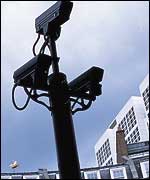 Cameras will identify cars coming in and out of London |
The other scare story, that the Tube and buses will not be able to cope, is nonsense. London's existing transport system can easily absorb the extra bodies, predicted to be about 30,000 a day. Livingstone has laid on extra buses and the rest are, statistically insignificant in relation to the 1.3 million coming into central London every day.
Generally, poorer people use public transport and do not own cars, especially in London where it is easy to get around without one. A study by review group Rocol found 70% of London's car owners were from the top half of income earners.
The expected �130m net annual income from the charge will be spent on improving bus services, which are disproportionately used by the poor.
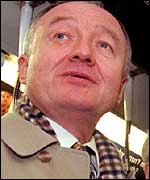 Ken Livingstone has staked his mayorship on the charge |
But all these rational explanations do not wash with the opponents because their subliminal argument is a much more fundamental and emotional one: that motorists should have the "right" to go anywhere without paying. That notion does not hold water.
Drivers are restricted by all kinds of traffic rules and pay fuel and road taxes. Indeed, there is nowhere to park legally for free within the central zone covered by the charge.
While the media coverage will highlight every blip in the system, the reality is the charge will make little difference to many Londoners. Most will cough up reluctantly, a few will forego their cars. It will be a small earthquake in London.
Christian Wolmar is a writer on transport matters. His latest book, Down the Tube, the Battle for London's Underground, is published by Aurum.







 E-mail this story to a friend





 Livingstone's manic obsession with rushing out an ill-considered scheme has set back the cause of congestion charging by decades


 63.39%
  36.61%