|
 |
 | | | | | | |||||||||||||||||||||||||||||||||||||||||||||||||||||||||||||||||||||||||||||||||||||||||||||||||||||||||||||||||||||||||||||||||||||||||||||
| | | You are in: UK | |||||||||||||||||||||||||||||||||||||||||||||||||||||||||||||||||||||||||||||||||||||||||||||||||||||||||||||||||||||||||||||||||||||||||||||||
|
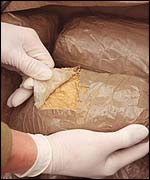
| | Thursday, 12 December, 2002, 16:24 GMT UK targets Afghan heroin production 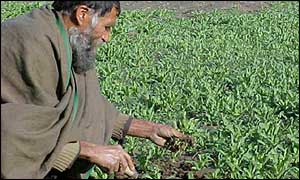 The Taleban reduced opium production British customs investigators have begun work in Afghanistan, in an attempt to reduce the amount of heroin reaching Britain. The team are training a counter-narcotics force in surveillance, drug-trafficking trends and search techniques. The war-torn country is the source of 90% of the heroin seized in the UK and production of the drug has soared since the fall of the Taleban regime. Customs Minister John Healey said: "We have a unique opportunity now to play our part in the disruption of an evil trade feeding drugs addiction not just in the UK but around the world." 'Practical measures' Officers from the Customs Investigation Unit are setting up the year-long training programme at the Afghan Police Academy in Kabul.
"Customs' aim is to assist the Afghan police with practical measures that will help trace those involved in drug trafficking and ensure proper systems are in place to take action against them," Mr Healy said. It is hoped the new counter-narcotics force will eventually operate in all the opium producing regions of Afghanistan. There are concerns that western Europe will soon be flooded by heroin unless smuggling routes from these areas are cut-off. 'Alternative lifestyles' Foreign Office minister Mike O'Brien has told MPs not to expect instant results from the efforts to assert control over farmers in Afghanistan.
"We are putting in place policies in order to do that not only because it is right for Afghanistan but also because it will prevent people dying on our streets if we are successful with that." Mr O'Brien said poppy production was expected to rise before it fell because it was necessary to establish substantial levels of control. Building an Afghan national army would take time, effort, resources and facilities, he said. Poppy crop Heroin production in Afghanistan has risen by up to 1,400% since the fall of the Taleban, which had banned the drug in July 2000. In July of this year United Nations drug officials said the new Afghan Government had largely failed to eradicate the opium poppy crop. A UN expert predicted that the "total likely yield" of this year's opium poppy crop would be between 1,900 and 2,700 metric tons, compared with 185 tons last year. Thirty thousand kilograms (66,000 lb) of heroin are smuggled in to Britain every year, but police and customs seized just 3,000 kg (6,600 lb) last year. In April the Foreign Office predicted the amount of heroin on Britain's streets would be cut by a scheme offering Afghan farmers 1,250 dollars (�800) for every hectare (2.4 acres) of opium destroyed. | |
See also:  05 Nov 02 | South Asia 26 Sep 02 | South Asia 27 Aug 02 | Politics Internet links: The BBC is not responsible for the content of external internet sites Top UK stories now: Links to more UK stories are at the foot of the page. | |||||||||||||||||||||||||||||||||||||||||||||||||||||||||||||||||||||||||||||||||||||||||||||||||||||||||||||||||||||||||||||||||||||||||||||
| |
|  E-mail this story to a friend E-mail this story to a friend |
| |
| Links to more UK stories |
| | | ||
 | ||||
 | | Back to top
| ||
| ---------------------------------------------------------------------------------- To BBC Sport>> | To BBC Weather>> | To BBC World Service>> ---------------------------------------------------------------------------------- © MMIII | News Sources | Privacy |




 We are in the process of nation building. I wish we could do it more quickly