
|
 |
 | | | | | | ||||||||||||||||||||||||||||||||||||||||||||||||||||||||||||||||||||||||||||||||||||||||||
| | | You are in: UK | ||||||||||||||||||||||||||||||||||||||||||||||||||||||||||||||||||||||||||||||||||||||||||||
|
| | Tuesday, 19 November, 2002, 12:46 GMT Is your loo drying up the UK? 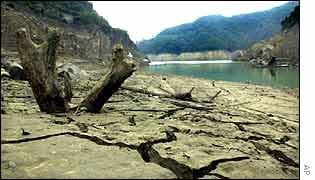 Could this be what's in store for the UK's reservoirs? Britons pay for electricity and gas by unit - why not water? Perhaps then we might notice how much gets needlessly flushed down the drain. It seems as if it rains all the time in the UK, yet the taps could run dry within a few decades. Water stores throughout Britain are stretched to the limit, yet we continue to use the stuff as if it's going out of fashion.
Even before it gets to our taps, one-fifth of the water supply is lost through leaky pipes - an improvement on a decade ago, when water companies let more than one-third seep away.
One way for households to save both water and money is to install a water meter. Currently just one in four houses is fitted with such a device. The National Consumer Council, which this week publishes a discussion document on water charging, believes there could be a case for metering in areas with shortages (and discounts for those least able to pay).
"The maximum that people with water meters save is 8% of their water usage; and deciding to use less water is much like trying to convince yourself to go to the gym - sometimes you do it, sometimes you don't." Also, individual efforts can only achieve so much. It would be far more effective for the government, suppliers and the building industry to support sustainable, community-wide measures.
"This meant a huge outlay for the New York authorities, but it meant that they didn't have the extra expense involved in building a new reservoir," Ms Holdsworth says. Rather than use fresh water to flush toilets, a cistern fed by rain water or grey water - the run-off from showers and sinks - could be used. Unless such measures become the norm, we could face a future where water no longer comes on tap.Ways to save water | | See also:  22 Mar 02 | In Depth 13 Oct 02 | Business 14 Aug 02 | UK Internet links: The BBC is not responsible for the content of external internet sites Top UK stories now: Links to more UK stories are at the foot of the page. | ||||||||||||||||||||||||||||||||||||||||||||||||||||||||||||||||||||||||||||||||||||||||||
| |
|  E-mail this story to a friend E-mail this story to a friend |
| |
| Links to more UK stories |
| | | ||
 | ||||
 | | Back to top
| ||
| ---------------------------------------------------------------------------------- To BBC Sport>> | To BBC Weather>> | To BBC World Service>> ---------------------------------------------------------------------------------- © MMIII | News Sources | Privacy |





 Hot house