|
 |
 | | | | | | ||||||||||||||||||||||||||||||||||||||||||||||||||||||||||||||||||||||||||||||||||||||||||||||||
| | | You are in: UK | ||||||||||||||||||||||||||||||||||||||||||||||||||||||||||||||||||||||||||||||||||||||||||||||||||
|
| | Friday, 30 August, 2002, 15:28 GMT 16:28 UK Dignity and despair in Sunderland 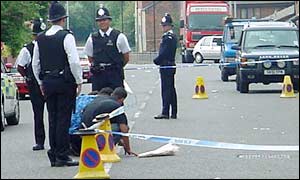 Grief: The cousins of Tayman Bahmani lay flowers where he fell
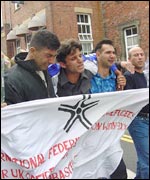
 Overnight, the cousins of 30-year-old Tayman Bahmani had travelled from Brighton to lead a vigil where the Iranian asylum seeker had been stabbed in the city. Mr Bahmani died after he and other Iranians were involved in a fight with a group of white people outside his own front door in Peel Street, in the Hendon area of the city. The details of what happened are unclear and four people are currently helping police with their inquiries. But what is clear is the police believe the attack was racially-motivated, and it has sent convulsions through the city's asylum seeker community. Vigil and march Sunderland is currently home to some 1,000 asylum seekers who have been rehoused in the city under the government's national dispersal programme.
But the anger was not shown with shouts of defiance and accusations. Instead, the men and women marched silently to the spot to Peel Street where their friend had fallen. There, they waited patiently as the police and Bahrain Asghar Zaida, a community leader, organised them all into pairs to go and deliver the flowers, one by one, at the scene. Some said a short prayer in Farsi, others just stood silently, taking in what had happened in the last couple of days. At the corner of the street, many others gathered. Mourners from all sections of the community, trade unionists, local residents and anti-racism campaigners. Many of those present said that they wished local politicians were also there to show solidarity. Cocktail of problems The district of Hendon is not a happy place. It has more than its own fair share of social problems - high unemployment, low educational achievement and all the baggage that comes with both.
On top of all this, the far-right are active in Sunderland - and Hendon in particular. The British National Party put up candidates at the general election in 2001 and the recent city council elections. The party described its vote in the city's poorest wards, home to many of the asylum seekers, as a great success. All of these factors have created a situation where asylum seekers are scared, and the long-settled immigrant community fears that racism is on the rise. 'Change for the worse' Bahrain who marshalled the mourners throughout the protest said that he had witnessed the city change for the worse.
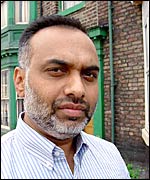
"Sunderland has taken in people from different parts of the world without any preparation, any education. Today, the situation is not so great as people would like it to be." The asylum seekers say that in the months leading up to the death of Mr Bahmani, there were at least a dozen incidents reported to police in Peel Street alone. The city's police say that they are now reviewing their records. One man who lived in the same house as Mr Bahmani, but did not want to be named, said: "We all know what's been going on, there have been racist attacks for too long now. We want to know why nothing has been done." Tahri Khan, head of Sunderland's Unity multicultural centre, said that tension had been rising for two years but many of the asylum seekers felt isolated and ignored by authorities in the city. In the weeks running up to the death of Mr Bahmani, there had been an increase in racist incidents, he said, leading to an emergency meeting of community groups to discuss their fears. "The ethnic minorities don't feel that they have been given an opportunity to deal with the problems by having representation," said Mr Khan. "They want their concerns acknowledged. The sad thing is that there are now some who think that it would be better to take matters into their own hands. "We warned two years ago that the city was not ready for asylum seekers. We warned that it would be a cultural shock to the city. Groundwork needed to be done to stop racists. That groundwork wasn't done." As the vigil came to an end and the mourners began to wind their way back towards the city centre for a protest outside the police station, other community leaders urged calm. Syed Khaled Miah, chairman of the city's Bangladeshi centre, said that the last thing the city's ethnic minorities needed was a bad situation made worse by hot heads. "This is a law-abiding country, and I would like to think that this can be a law abiding city," he said. "That means we must let the law take its course, let justice be done for the death of this young man. "There are problems in this city, but we will not solve them if we do not work with all the authorities to solve them." | | See also:  30 Aug 02 | England 30 Aug 02 | England 29 Aug 02 | UK Internet links: The BBC is not responsible for the content of external internet sites Top UK stories now: Links to more UK stories are at the foot of the page. | ||||||||||||||||||||||||||||||||||||||||||||||||||||||||||||||||||||||||||||||||||||||||||||||||
| |
|  E-mail this story to a friend E-mail this story to a friend |
| |
| Links to more UK stories |
| | | ||
 | ||||
 | | Back to top
| ||
| ---------------------------------------------------------------------------------- To BBC Sport>> | To BBC Weather>> | To BBC World Service>> ---------------------------------------------------------------------------------- © MMIII | News Sources | Privacy |