
|
 |
 | | | | | | ||||||||||||||||||||||||||||||||||||||||||||||||||||||||||||||||||||||||||||||||||||||||||
| | | You are in: UK | ||||||||||||||||||||||||||||||||||||||||||||||||||||||||||||||||||||||||||||||||||||||||||||
|
| | Wednesday, 12 June, 2002, 11:45 GMT 12:45 UK Power to the car poolers Drivers who share cars can help cut congestion The internet has earned a fearsome reputation for its romantic match-making capabilities. Now commuters are using it to make unions of a different kind - among car sharers. Tired of gridlocked traffic and the hunt for elusive car parks? Want to cut pollution and save money? The most effective way to do this is to cut the number of cars on the road.
According to the Don't Choke Britain campaign, which launched on Tuesday, car traffic in the UK has grown 15-fold since the 1950s. Air and noise pollution has worsened as traffic has slowed. And a government-funded report out the same day has suggested motorway tolls in the south-east to pay for lane widening on the M25 and a luxury bus service circling London. Filling empty seats But many owners love their cars too much to stop driving, and for other motorists public transport in their area isn't up to much.
Now that the internet has made match-making easy, putting drivers and journeys together has become a lot simpler. When Lee Underwood, a warehouse worker in Norfolk, started a new job last December he thought the 25-mile journey to work would be a nightmare.
Not only has the scheme saved him time and money, Mr Underwood says he has become firm friends with his co-driver. "Because we work for different companies, there was no way we could have linked up otherwise." Easy being green Liftshare, the non-profit-making company behind the Norfolk site, has set up similar schemes around England. Founder Ali Clabburn says car pooling is increasingly popular.
"We're hoping to make 3,000 matches among people going to Glastonbury, for instance, which will get hundreds of cars off the road." Since last year, local authorities are required to put green transport plans in place. Similarly new factories, business parks and housing estates must provide alternative transport schemes to ease congestion. "Setting up a lift share scheme is far cheaper and easier for them than putting on a coach service which people might not even use," Mr Clabburn says. Some schemes allow those looking to car share can specify what time they start and finish, whether they smoke and even which radio station they listen to while driving.
Last August a business park in Edinburgh launched a scheme after a survey of staff showed that up to 40% would be prepared to take part. Almost one year on, less than two in 10 share their drive to work. Some have been unable to find a neighbour to share with; those on child-shuttling duties continue to drive to work; and those with a company car are unable - or unwilling - to leave home without it. For British drivers gridlocked on increasingly congested roads, it seems that old habits die hard. Would you share a ride with another driver? And has car pooling come of age now we can match drivers to journeys online? Tell us what you think using the form below. Our company has about 120 sharing groups (out of 2,500 staff). We get a free car valet quarterly, priority parking spaces and access to a "books on tape" library. It saves me about �750pa in petrol and when I'm not driving I get home a lot more relaxed. As a transport planner I'm professionally aware of the benefits of car sharing. But flexitime working arrangements, introduced to spread traffic peaks, can often act as a barrier to the success of an initiative. If I could find somebody who fits the following criteria, then I would certainly car pool: live and work in the same areas that I do; share my irregular office hours; and attend the same gym and sports training that I attend on several evenings during the working week. Isn't the traffic dead during school holidays! Shouldn't we have more school buses to simulate this effect everyday? I tried car sharing but it didn't work. I'm a lone parent and so needed to get home to spend time with my daughter and to relieve my childminder, whereas my colleague was quite happy to work overtime at the drop of a hat. If incentives were given (exemption from/reduced toll charges when introduced), this would be a more attractive prospect. For workers expected to work longer hours these days (most people?), car pooling just isn't practical. Perhaps we should sign up to the EU maximum working directive if we want such schemes to succeed. Getting into a car with anyone else driving is a matter of trust, and not exactly appealing to a single woman. And my job requires me to work all over the north of England so the scheme would be unlikely to work for me. It works well as part of travel-to-work schemes. There is the sense that car sharers, as they're workmates, are trust worthy. We've set up a similar idea to this but for the road haulage industry - sharing back loads and part-loaded journeys. Visit www.combineloads.com | | See also:  11 Jun 02 | England 22 Oct 01 | dot life 23 Oct 01 | UK 16 Apr 02 | UK 21 Nov 00 | UK Internet links: The BBC is not responsible for the content of external internet sites Top UK stories now: Links to more UK stories are at the foot of the page. | ||||||||||||||||||||||||||||||||||||||||||||||||||||||||||||||||||||||||||||||||||||||||||
| |
|  E-mail this story to a friend E-mail this story to a friend |
| |
| Links to more UK stories |
| | | ||
 | ||||
 | | Back to top
| ||
| ---------------------------------------------------------------------------------- To BBC Sport>> | To BBC Weather>> | To BBC World Service>> ---------------------------------------------------------------------------------- © MMIII | News Sources | Privacy |







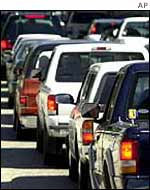
 In a jam