|
 |
 | | | | | | |||||||||||||||||||||||||||||||||||||||||||||||||||||||||||||||||||||||||||||||||||||||||||||||||||||||||||||||||||||||||||||||||||||||||||||||||||||||||||||||||||||||
| | | You are in: Technology | |||||||||||||||||||||||||||||||||||||||||||||||||||||||||||||||||||||||||||||||||||||||||||||||||||||||||||||||||||||||||||||||||||||||||||||||||||||||||||||||||||||||||
|
| | Tuesday, 8 October, 2002, 17:53 GMT 18:53 UK Report gives polygraphs the lie 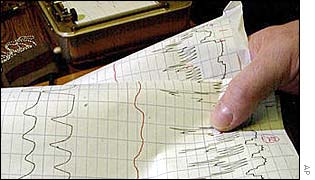 A trained infiltrator could cheat the machine Electronic lie detectors, or polygraphs, are of little use in screening applicants for jobs at sensitive locations, says a US report. An applicant with the proper training could fool a polygraph, the National Research Council (NRC) concludes after an extensive survey involving interviews with CIA and FBI experts.
But it adds that such tests continued to have some value where the subject lacked grounding in how to cheat the machine. US Government departments conduct thousands of polygraph tests each year on job applicants and employees. The BBC's Alex van Wel reports that such tests are used to screen employees at locations such as nuclear plants and bases where dangerous chemicals like anthrax are stored. Lab loopholes The NRC report was commissioned by the Department of Energy before last year's 11 September terror attacks. Over 19 months, a committee interviewed US security officials and visited polygraph facilities at several government facilities, as well as studying reports and publications.
"Overconfidence in polygraph screening can create a false sense of security that may in turn lead to inappropriate relaxation of other methods of ensuring security." Polygraph testing as a method of screening is, in fact, "intrinsically susceptible to producing erroneous results", the report says But the report accepts that polygraphs do have a role to play in certain cases: "In populations of examinees untrained in counter-measures, specific-incident polygraph tests can discriminate lying from truth-telling at rates well above chance, though well below perfection." 'No choice' The concept of lie-detecting machines is based on the fact that when a person lies, there are certain changes in physiology which can be measured. The modern polygraph works by measuring several basic changes, which can include breathing rate, the electrical conductivity of the skin, heart rate, and blood pressure. Our correspondent says that polygraphs are viewed as useful for tests relating to specific incidents. Critics of the report, he adds, believe that in the absence of any alternative they will continue to be used, despite any shortcomings. | |
See also:  22 Aug 02 | Science/Nature 22 Aug 02 | Americas 06 Jan 02 | UK 16 Mar 01 | UK 24 Mar 01 | Americas Internet links: The BBC is not responsible for the content of external internet sites Top Technology stories now: Links to more Technology stories are at the foot of the page. | |||||||||||||||||||||||||||||||||||||||||||||||||||||||||||||||||||||||||||||||||||||||||||||||||||||||||||||||||||||||||||||||||||||||||||||||||||||||||||||||||||||||
| |
|  E-mail this story to a friend E-mail this story to a friend |
| |
| Links to more Technology stories |
| | | ||
 | ||||
 | | Back to top
| ||
| ---------------------------------------------------------------------------------- To BBC Sport>> | To BBC Weather>> | To BBC World Service>> ---------------------------------------------------------------------------------- © MMIII | News Sources | Privacy |