|
 |
 | | | | | | ||||||||||||||||||||||||||||||||||||||||||||||||||||||||||||||||||||||||||||||||||||||||||||||||||||||||||||||||||||||||||||||||||||||||||||||||||||||||||||||||||||||||||
| | | You are in: Americas | ||||||||||||||||||||||||||||||||||||||||||||||||||||||||||||||||||||||||||||||||||||||||||||||||||||||||||||||||||||||||||||||||||||||||||||||||||||||||||||||||||||||||||||
|
| | Thursday, 22 August, 2002, 18:33 GMT 19:33 UK Loving and hating lie detecting 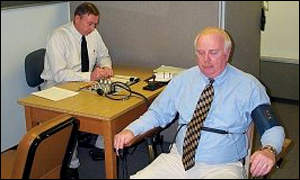 US law enforcement regularly use polygraph tests
While lie detector tests are little used in the UK, they are employed with great regularity in the United States to the consternation of civil-liberties advocates.
The lie detector - or polygraph - test is an American phenomenon that has found acceptance outside the US in countries with strong ties to it, including Israel and Canada. Congressional action in 1988 severely limited the use of polygraph tests by employers who often used them as a screening technique for potential new hires. Today, lie-detector tests are still permitted and regularly administered to people applying for local, state and federal government jobs as well as those private firms engaged in protecting national security. The lie detector is a curious machine that is much-derided - if feared - within American culture. Rarely admissible Results of such tests are rarely admissible in US courts, since data suggest the tests are accurate only half of the time.
Following last year's embarrassing arrest of FBI agent Robert Hanssen, who admitted to spying for Russia's KGB, the agency implemented mandatory, random lie-detector testing. Previously, the high-profile arrest of Wen Ho Lee, the nuclear-weapons scientist accused of passing secrets to China, caused the Department of Energy to require certain employees to undergo the tests as well. Measuring emotions The instrument is used to measure how a person's body reacts to questions. It is based on the theory that physical responses will indicate if he or she is telling the truth. "The lie detector does not measure truth-telling," the American Civil Liberties Union (ACLU), a critic of such tactics, said in its 1996 report on polygraph testing. "[I]t measures changes in blood pressure, breath rate and perspiration rate, but those physiological changes can be triggered by a wide range of emotions such as anger, sadness, embarrassment and fear," the report said. Flunking out Physical characteristics usually associated with lying, such as avoiding eye contact and fidgeting led to the first polygraph test by inventor William Marston in 1917.
Mr Marston believed blood-pressure changes could determine whether a person was lying or not. His invention was widely criticised and a landmark court case, Frye vs. United States, severely limited its use as courtroom evidence. A more complex instrument and testing technique were developed in subsequent years, leading to wide use of polygraph tests by the 1950s despite concern the manner in which the test is given is quite suspect. The problem stems from the nervousness some people exhibit when hooked up to the machine and asked certain questions. Innocent people are known to have flunked the test because of their physical reaction to intense questioning. Still in use Doubts over the reliability of such tests led to a major policy shift by the Philadelphia police department last May. The agency no longer requires new recruits to pass a lie-detector test to be accepted on the force. The tests were first implemented in the 1970s just as the department entered a period of wide-spread corruption among even its highest ranks. In backing the revised policy, police-union president Richard Costello called the polygraph "nothing more than a gadget". Still, police departments and other law-enforcements agencies across the US use the polygraph regularly. The much-criticised Los Angeles police department re-implemented polygraph testing two years ago after abandoning it for 10 years. | | See also:  22 Aug 02 | UK 13 Jul 01 | Americas 24 Mar 01 | Americas 14 Jun 00 | Americas Internet links: The BBC is not responsible for the content of external internet sites Top Americas stories now: Links to more Americas stories are at the foot of the page. | ||||||||||||||||||||||||||||||||||||||||||||||||||||||||||||||||||||||||||||||||||||||||||||||||||||||||||||||||||||||||||||||||||||||||||||||||||||||||||||||||||||||||||
| |
|  E-mail this story to a friend E-mail this story to a friend |
| |
| Links to more Americas stories |
| | | ||
 | ||||
 | | Back to top
| ||
| ---------------------------------------------------------------------------------- To BBC Sport>> | To BBC Weather>> | To BBC World Service>> ---------------------------------------------------------------------------------- © MMIII | News Sources | Privacy |