|
 |
 | | | | | | |||||||||||||||||||||||||||||||||||||||||||||||||||||||||||||||||||||||||||||||||||||||||||||||||||||||||||||||||||||||||||||||||||||||||||||||||||||||||||||||||||||||||||
| | | You are in: Technology | |||||||||||||||||||||||||||||||||||||||||||||||||||||||||||||||||||||||||||||||||||||||||||||||||||||||||||||||||||||||||||||||||||||||||||||||||||||||||||||||||||||||||||||
|
| | Monday, 19 August, 2002, 09:12 GMT 10:12 UK Computing power aids alien hunters 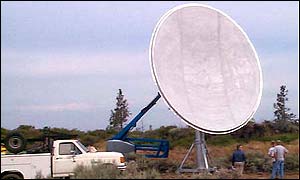 An array of dishes is planned [Seti Institute] Our chances of getting in touch with ET are increasing due to the rapid advances in computer technology, say alien hunters. Scientists at the Search for Extra-Terrestrial Intelligence (Seti) Institute in the US are using powerful radio telescopes to listen to radio signals from space. "The whole idea that we can prove that we are not alone in the universe by finding aliens in situ at home, by eavesdropping on their broadcast signals, is being made possible by the revolution in digital technology," said Dr Seth Shostak, senior astronomer at the Seti Institute. "The chances that you'll hit the jackpot keep getting better thanks to this improvement in technology," he told the BBC programme Go Digital. Processing power The prospect that we may not be alone in the Universe has captured the imagination of writers and scientists for decades.
At the Seti Institute, they have been listening to radio signals from the stars using large radio telescopes. "You point them in the direction of nearby stars that are like our own Sun and if they are using radio technology then we should be able to pick up signals in this particular radio band," said Dr Shostak. "But you have to monitor many hundreds of millions, if not many thousands of millions of channels because ET never sent us an e-mail saying where on the dial he might be broadcasting. "In order to be able to do that fast and with a great deal of sensitivity, you need computers," he said. At the moment, the computer equipment used by the Seti Institute has been purpose-built by staff, since commercially available PCs are not powerful to process the data fast enough. Souped up antennas Seti scientists are optimistic that as computer get more and more powerful, their chances of stumbling across ET are increasing.
Scientists are now working with the University of California at Berkeley Radio Astronomy Lab to build an inexpensive array of telescopes to listen to signals from space. "We're building a new instrument that will consist of 350 souped up antennas linked up by digital technology," explained Dr Shostak. "They will operate as one and that is the instrument that may put us in touch." The Allen Telescope Array is due to come online in 2005. Data crunchers Best known for Project Phoenix, the search portrayed in the movie Contact, the Seti Institute has also helped fund the search gathering data for the popular Seti@home program. Almost 4m people have downloaded the screensaver program, which allows anyone with a desktop computer to join the search for intelligent life in space. "This is an endeavour that has wide appeal," said Dr Shostak. "Everybody finds a certain excitement that today finally we may be able to find an answer to a question that every generation of humans has asked." | |
See also:  29 Jan 01 | Science/Nature 23 Jan 01 | Science/Nature 31 Oct 00 | Wales 24 Jul 01 | Science/Nature 27 Mar 02 | Science/Nature 03 Jun 02 | dot life 20 Apr 00 | Science/Nature Internet links: The BBC is not responsible for the content of external internet sites Top Technology stories now: Links to more Technology stories are at the foot of the page. | |||||||||||||||||||||||||||||||||||||||||||||||||||||||||||||||||||||||||||||||||||||||||||||||||||||||||||||||||||||||||||||||||||||||||||||||||||||||||||||||||||||||||||
| |
|  E-mail this story to a friend E-mail this story to a friend |
| |
| Links to more Technology stories |
| | | ||
 | ||||
 | | Back to top
| ||
| ---------------------------------------------------------------------------------- To BBC Sport>> | To BBC Weather>> | To BBC World Service>> ---------------------------------------------------------------------------------- © MMIII | News Sources | Privacy |