|
 |
 | | | | | | |||||||||||||||||||||||||||||||||||||||||||||||||||||||||||||||||||||||||||||||||||||||||||||||||||||||||||||||||||||||||||||||||||||||||||||||||||||||||||||||||||||||||||||||||||||||||||||||||||||||||||||||||||||||||||||||||||||
| | | You are in: South Asia | |||||||||||||||||||||||||||||||||||||||||||||||||||||||||||||||||||||||||||||||||||||||||||||||||||||||||||||||||||||||||||||||||||||||||||||||||||||||||||||||||||||||||||||||||||||||||||||||||||||||||||||||||||||||||||||||||||||||
|
| | Thursday, 5 December, 2002, 18:09 GMT Sri Lanka peace breakthrough 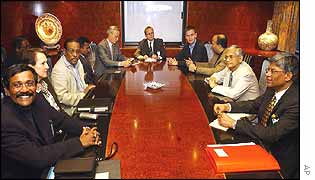 The two sides have both made concessions Sri Lanka's Government and Tamil Tiger rebels have agreed to share power in a federal system, to end 19 years of civil war on the island. The joint declaration came at the end of four days of peace talks in the Norwegian capital, Oslo.
Under Thursday's deal, minority Tamils would have autonomy in the largely Tamil-speaking north and east of the island. Chief government negotiator GL Peiris said the agreement was "irreversible". "It is a commitment to peace," he said. "There is not going to be war." Anton Balasingham, the chief rebel negotiator, described developments as historic.
Meanwhile, Japan has agreed to host an international aid donors conference next May or June to raise vital funds with which to rebuild Sri Lanka's war-devastated areas. Constitution Despite doubts about the handling of the peace process, the opposition party of President Chandrika Kumaratunga welcomed Thursday's deal, too. A senior presidential aide said the party supported devolution within a federal framework - the president herself had recommended it in the past.
But he adds that parliament must approve any change to the constitution, requiring a two-thirds majority the government does not have. It must also deal with a quirk in the constitution which allows the president to dissolve parliament a year into its term. That anniversary was reached on Thursday. The president's supporters, however, say early elections are a "last resort". "At the moment we have no interest in dissolving parliament," Anura Bandaranaike, her brother and chief adviser, told reporters. Rebuilding
People yearn for peace, and for the island's shattered economy and infrastructure to be rebuilt. Shariya Wanigasekara, a teacher from the Sinhalese community, says the whole atmosphere has changed because of the peace process. "It is a feeling of security away from the fear of bombs exploding everywhere," he told the Associated Press. Neelan Sathyaseelan, a Tamil forced to flee his home, was more sceptical whether the government could ensure lasting peace. "Why should we believe them this time? I lost everything. My land is now full of mines," he said. | |
See also:  04 Dec 02 | South Asia 03 Dec 02 | South Asia 28 Nov 02 | South Asia 26 Nov 02 | South Asia 03 Nov 02 | South Asia Internet links: The BBC is not responsible for the content of external internet sites Top South Asia stories now: Links to more South Asia stories are at the foot of the page. | |||||||||||||||||||||||||||||||||||||||||||||||||||||||||||||||||||||||||||||||||||||||||||||||||||||||||||||||||||||||||||||||||||||||||||||||||||||||||||||||||||||||||||||||||||||||||||||||||||||||||||||||||||||||||||||||||||||
| |
|  E-mail this story to a friend E-mail this story to a friend |
| |
| Links to more South Asia stories |
| | | ||
 | ||||
 | | Back to top
| ||
| ---------------------------------------------------------------------------------- To BBC Sport>> | To BBC Weather>> | To BBC World Service>> ---------------------------------------------------------------------------------- © MMIII | News Sources | Privacy |