|
 |
 | | | | | | |||||||||||||||||||||||||||||||||||||||||||||||||||||||||||||||||||||||||||||||||||||||||||||||||||||||||||||||||||||||||||||||||||||||||||||||||||||||||||||||||||||||||||||||||||||||||
| | | You are in: South Asia | |||||||||||||||||||||||||||||||||||||||||||||||||||||||||||||||||||||||||||||||||||||||||||||||||||||||||||||||||||||||||||||||||||||||||||||||||||||||||||||||||||||||||||||||||||||||||||
|
| | Monday, 16 September, 2002, 17:02 GMT 18:02 UK The road to peace in Sri Lanka 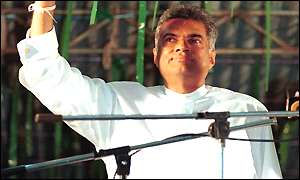 Mr Wickramasinghe initiated the current peace effort
This is the fifth attempt at negotiations between the Sri Lankan Government and the Tamil Tigers, but only the third face-to-face talks, ever since the ethnic conflict erupted in the early 1980's.
The early attempts were initiated by the neighbouring India in 1985-86, inviting the Tamil groups and the Sri Lankan government for talks at the Bhutanese capital, Thimpu. During the Thimpu talks, Tamil militant groups put forward four main demands. These were - recognition of Tamils as a distinct nationality, their right to self-determination, recognition of the north and east of Sri Lanka as the traditional Tamil homeland, and full citizenship and other fundamental rights for all Tamils in the country. The Sri Lankan government rejected the first three of these demands saying they violated Sri Lanka's sovereignty. Indo-Sri Lankan accord After widespread violence in 1987, India once again brought the two parties to the negotiating table.
An Indo-Sri Lanka peace accord was signed by the then Indian Prime Minister Rajiv Gandhi and the Sri Lankan President, JR Jayawardene. Tamil Tigers reluctantly accepted the accord under Indian pressure. Under the accord, a new North-Eastern provincial council was formed and Indian army was deployed as peace keepers in the north and east. However, differences between India and LTTE soon surfaced and led to clashes between Tiger guerrillas and the Indian peace keeping force (IPKF). About 1,200 Indian soldiers were killed during this phase of the conflict. India had to pull back its forces from Sri Lanka in 1989 following the election of Ranasinghe Premadasa, a strong critic of Indian mediation. Unique talks Later Premadasa himself initiated dialogue with the LTTE which went on for more than a year. It failed on the issue of the controversial Sixth Amendment to the constitution, which barred any Sri Lankan supporting a separatist cause from holding public offices or contesting elections. The Tigers demanded the repeal of this amendment. Hostilities were resumed after the talks failed. In 1994 the newly-elected People's Alliance of Prime Minister Chandrika Kumaratunga initiated another round of talks. But this time round, the ceasefire lasted for only four months as the Red Cross-mediated talks could not go beyond the exchange of some letters. The present round of negotiations, initiated by Prime Minister Ranil Wickramasinghe is unique in a way because this is the first time a power from outside the region is mediating. And the post-11 September international mood against terrorism has also brought new pressures on the Tamil Tigers to end their violent struggle that has bled the country for more than 20 years. | |
See also:  14 Sep 02 | From Our Own Correspondent 13 Sep 02 | South Asia 16 Sep 02 | South Asia 13 Sep 02 | Business 11 Sep 02 | South Asia 09 Sep 02 | South Asia 09 Sep 02 | South Asia Internet links: The BBC is not responsible for the content of external internet sites Top South Asia stories now: Links to more South Asia stories are at the foot of the page. | |||||||||||||||||||||||||||||||||||||||||||||||||||||||||||||||||||||||||||||||||||||||||||||||||||||||||||||||||||||||||||||||||||||||||||||||||||||||||||||||||||||||||||||||||||||||||
| |
|  E-mail this story to a friend E-mail this story to a friend |
| |
| Links to more South Asia stories |
| | | ||
 | ||||
 | | Back to top
| ||
| ---------------------------------------------------------------------------------- To BBC Sport>> | To BBC Weather>> | To BBC World Service>> ---------------------------------------------------------------------------------- © MMIII | News Sources | Privacy |