|
 |
 | | | | | | |||||||||||||||||||||||||||||||||||||||||||||||||||||||||||||||||||||||||||||||||||||||||||||||||||||||||||||||||||||||||||||||||||||||||||||||||||||||||||||||||||||||||||||||||||||||||||||||
| | | You are in: South Asia | |||||||||||||||||||||||||||||||||||||||||||||||||||||||||||||||||||||||||||||||||||||||||||||||||||||||||||||||||||||||||||||||||||||||||||||||||||||||||||||||||||||||||||||||||||||||||||||||||
|
| | Thursday, 29 August, 2002, 16:00 GMT 17:00 UK Musharraf fears fallout of Iraq attack 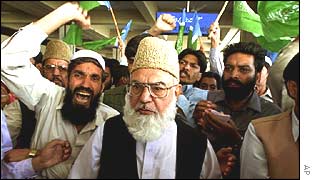 Islamist groups could capitalise on anti-US feeling
It is because he fears that a possible backlash may engulf the entire Islamic world, with Pakistan no exception. President Musharraf has not yet neutralised the effects of the US-led war in Afghanistan, and on a more limited scale, his government continues to face the challenge of Islamic extremism. Pakistan's military ruler feels the Islamic fervour that the attack on Iraq could create will only add to his problems. President Musharraf's worries about fallout from the intended US military strikes against Saddam Hussein are understandable. Gulf war protests In 1990 when US-led allied forces gathered in the Gulf for the first military operation against Iraq, Pakistan witnessed massive street demonstrations across the country.
And all this happened when Pakistan had itself sent a sizeable number of its troops in support of the allied action. This time the situation in Pakistan is even more precarious. Afghan backlash When, in the wake of the events of 11 September, US-led military strikes started against the Taleban and al-Qaeda in Afghanistan, there were a series of violent demonstrations in Pakistan. There were calls by extremist Islamic leaders for a holy war or jihad against the Americans, and thousands of people from the country's North-West Frontier Province went to Afghanistan to fight alongside the Taleban.
The sudden collapse of the Taleban brought the situation under control to some extent. But even today, bands of Islamic extremists in Pakistan try to target Westerners and local Christians in retaliation for the war in Afghanistan. Continuing US operations in Afghanistan, and reports of civilian casualties during air strikes have not gone down well - even with liberal sections of Pakistani society. Besides, the never-ending conflict between Israel and the Palestinians, and US support for the former, has also been a cause of anti-American feeling in Pakistan. Election fears There is yet another factor which is a cause for concern. With the general elections in Pakistan less than six weeks away, six prominent Islamic political parties have formed an alliance to jointly contest the elections, with opposition to President Musharraf's pro-West policies as their main campaign slogan. In Pakistan's electoral politics, Islamist groups have never been able to get more than 10% of the vote. But senior officials believe that if the present confrontation between the US and Iraq develops into a military conflict, the expected wave of Islamic fervour is bound to help the Islamic alliance. President Musharraf's would be reluctant to admit that such an eventuality would endanger his own position. But he is convinced that a US military strike against Iraq will have negative repercussions in Pakistan and the rest of the Islamic world, and is hoping that the United States will take this into account. | |
See also:  29 Aug 02 | Middle East 28 Aug 02 | Politics 27 Aug 02 | Middle East 27 Aug 02 | Americas 27 Aug 02 | Business 26 Aug 02 | Middle East Internet links: The BBC is not responsible for the content of external internet sites Top South Asia stories now: Links to more South Asia stories are at the foot of the page. | |||||||||||||||||||||||||||||||||||||||||||||||||||||||||||||||||||||||||||||||||||||||||||||||||||||||||||||||||||||||||||||||||||||||||||||||||||||||||||||||||||||||||||||||||||||||||||||||
| |
|  E-mail this story to a friend E-mail this story to a friend |
| |
| Links to more South Asia stories |
| | | ||
 | ||||
 | | Back to top
| ||
| ---------------------------------------------------------------------------------- To BBC Sport>> | To BBC Weather>> | To BBC World Service>> ---------------------------------------------------------------------------------- © MMIII | News Sources | Privacy |