|
 |
 | | | | | | |||||||||||||||||||||||||||||||||||||||||||||||||||||||||||||||||||||||||||||||||||||||||||||||||||||||||||||||||||||||||||||||||||||||||||||||||||||||||||||||||||||||||||||||||||||||||
| | | You are in: South Asia | |||||||||||||||||||||||||||||||||||||||||||||||||||||||||||||||||||||||||||||||||||||||||||||||||||||||||||||||||||||||||||||||||||||||||||||||||||||||||||||||||||||||||||||||||||||||||||
|
| | Friday, 2 August, 2002, 10:18 GMT 11:18 UK Boost for Sri Lanka peace hopes 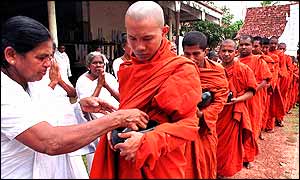 Even the Buddhist clergy are backing peace efforts
There is fresh hope for peace in Sri Lanka after the most high-profile meeting yet between the government and Tamil Tiger rebels fighting for their own state in the north and east of the island.
The meeting ended with a statement expressing optimism about planned talks to be held later this year in Thailand. After signing a ceasefire agreement in February, the peace process moved ahead very rapidly. The borders between rebel-controlled territory and government areas were opened. The Tigers started opening political offices in government-controlled areas and the prime minister and other ministers visited the north. The press conference held by the Tamil Tiger leader Vellupillai Pirabhakaran in April for the local and international media became one of the most important media events in the region. Even the leaders of the Buddhist clergy - traditionally seen as opposed to any compromise with the Tamil rebels - have given their blessing to Prime Minister Ranil Wickramasinghe's peace process. There were even statements from the government about the possibility of lifting the ban on Tamil Tigers. Problems emerge But then the pace slackened and the two sides started accusing each other of trying to break the agreement.
They also accused the government of preventing political activity in the islands off the coast of Jaffna. The government accused the rebels of stockpiling new weapons, recruiting under-aged combatants in government-controlled areas and carrying out operations at sea. The talks scheduled for July seemed impossible with disagreements and finger pointing on the increase. Criticism The government also came under heavy criticism from right-wing nationalist forces on the one hand, and President Kumaratunga on the other. There were calls made to revise the truce agreement. Problems mounted as clashes erupted in the east of the island between Tamils and Sri Lanka's Muslim minority, throwing into doubt Muslim support for a process they had previously backed unequivocally. But now both parties seem to have come back to the negotiating table as a result of relentless efforts by Norwegian negotiators. The Norwegians see the outlook as positive. Though disputes about contents of the truce agreement are still to be ironed out between the two parties, the peace process does seem to be back on track - at least for the time being. | |
See also:  28 Jul 02 | South Asia 16 Jul 02 | South Asia 14 Jul 02 | South Asia 08 Jul 02 | South Asia 29 May 02 | South Asia 21 Dec 01 | South Asia Internet links: The BBC is not responsible for the content of external internet sites Top South Asia stories now: Links to more South Asia stories are at the foot of the page. | |||||||||||||||||||||||||||||||||||||||||||||||||||||||||||||||||||||||||||||||||||||||||||||||||||||||||||||||||||||||||||||||||||||||||||||||||||||||||||||||||||||||||||||||||||||||||
| |
|  E-mail this story to a friend E-mail this story to a friend |
| |
| Links to more South Asia stories |
| | | ||
 | ||||
 | | Back to top
| ||
| ---------------------------------------------------------------------------------- To BBC Sport>> | To BBC Weather>> | To BBC World Service>> ---------------------------------------------------------------------------------- © MMIII | News Sources | Privacy |