|
 |
 | | | | | | ||||||||||||||||||||||||||||||||||||||||||||||||||||||||||||||||||||||||||||||||||||||||||||||||||||||||||||||||||||||||||||||||||||||||||||||||||||||||||||||||||||||||||||||||||||||||||||
| | | You are in: South Asia | ||||||||||||||||||||||||||||||||||||||||||||||||||||||||||||||||||||||||||||||||||||||||||||||||||||||||||||||||||||||||||||||||||||||||||||||||||||||||||||||||||||||||||||||||||||||||||||||
|
| | Friday, 12 July, 2002, 20:29 GMT 21:29 UK Musharraf's kind of election 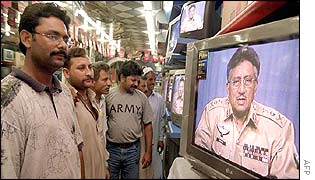 Musharraf says he wants a "new generation" of politicians
The Pakistani army believes it is now ready for the 10 October elections. Pakistani President Pervez Musharraf's latest address to the nation completes a package of constitutional reform proposals intended to ensure that the army will remain in charge whichever party controls the National Assembly.
General Musharraf has confirmed that he wants to institutionalise the army's role in politics by giving constitutional powers to the National Security Council. Earlier this year the Pakistani leader had suggested that he, as president, would have the power to dismiss the prime minister and to call for new National Assembly elections. Concessions In his latest speech he has said those powers will be held by the Security Council. And by proposing that the parliamentary opposition leader will sit on the council, he has ensured that the five senior military officers on the body will be outnumbered by six civilians. The changes do amount to significant concessions by General Musharraf. Even so, the army is likely to continue to dominate the political system after the election. The top priority for the military now is ensuring that the two most popular politicians in Pakistan, Nawaz Sharif and Benazir Bhutto, do not stand in October. Both are currently in self imposed exile: Mr Sharif lives in Saudi Arabia, Mrs Bhutto is based in Dubai. Both their parties, the Muslim League and the Pakistan People's Party, are insisting they will contest the election. Keeping the opposition out If either did return, the election campaign would immediately be transformed into a highly charged struggle for power.
The military has taken a number of steps to persuade the two former prime ministers to stay away. The process began in December 2000 when the army agreed to release Nawaz Sharif from prison in return for an undertaking that he would keep out of Pakistan for 10 years. Despite statements from his party officials Mr Sharif may well honour that pledge. Mrs Bhutto, though, is seriously considering returning. That helps explain why earlier this week she was sentenced to a three-year prison term. It is now clear that were she go back to Pakistan, she would be arrested. New blood The army is also worried about who else might contest the October elections.
That means many prominent Pakistani politicians will be unable to stand. Indeed, it is reckoned 90% of the members of the last parliament will be disqualified from seeking re-election. That will delight General Musharraf. He has said repeatedly that throughout the 1990s that the civilian politicians were so corrupt and incompetent they failed to govern the country effectively. He wants a new generation of well-educated leaders to inject fresh blood into the political system. At the same time the army is calculating that if the new National Assembly members are relatively unknown they will be too weak to confront the military regime and demand a return to full democracy. New challenges General Musharraf has long accepted that he has little choice but to hold national elections. And there are signs he has learnt from some of the mistakes made by his predecessors. Faced with a similar situation, two previous military rulers in Pakistan, General Ayub Khan and General Zia, tried to ban political parties from taking part in national elections. Both times the tactic backfired and General Musharraf seems determined to avoid a repeat performance. The army believes there is little more it can do to ensure that it will remain strong after the election. Despite that General Musharraf will inevitably find life more difficult after 10 October. At the moment he rules virtually unopposed. After the elections the politicians are bound to mount some kind of a challenge, even if at first it is a relatively muted one. | |
See also:  12 Jul 02 | South Asia 10 Jul 02 | South Asia 12 Jul 02 | South Asia 07 Jul 02 | South Asia 27 Jun 02 | South Asia 21 Jun 02 | South Asia 02 May 02 | Country profiles Internet links: The BBC is not responsible for the content of external internet sites Top South Asia stories now: Links to more South Asia stories are at the foot of the page. | ||||||||||||||||||||||||||||||||||||||||||||||||||||||||||||||||||||||||||||||||||||||||||||||||||||||||||||||||||||||||||||||||||||||||||||||||||||||||||||||||||||||||||||||||||||||||||||
| |
|  E-mail this story to a friend E-mail this story to a friend |
| |
| Links to more South Asia stories |
| | | ||
 | ||||
 | | Back to top
| ||
| ---------------------------------------------------------------------------------- To BBC Sport>> | To BBC Weather>> | To BBC World Service>> ---------------------------------------------------------------------------------- © MMIII | News Sources | Privacy |