The incredible biodiversity of the Galapagos Islands was key to shaping Charles Darwin's theory of evolution.
Two hundred years on from the birth of Darwin, BBC science correspondent David Shukman visits the archipelago.
Use the map below to move around three of the main islands. Click on the icons to see how the wildlife and landscape informed the scientist's great discoveries.
Lonesome George has been described as the world's rarest creature - he is the last remaining survivor of a subspecies of giant tortoise.
id
tortoise
type
image
width
488
top
0
left
auto
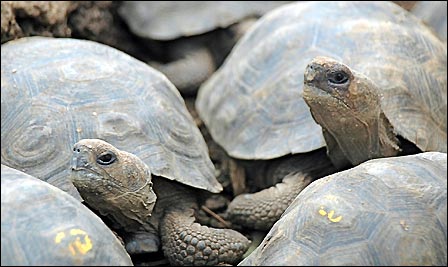
Saving the tortoises of the Galapagos
Since the 17th Century, populations of giant tortoises have declined dramatically. But the Charles Darwin Research Station has used captive-breeding programmes to boost numbers, and over the past few decades thousands have been released back into the wild.
id
oneday
type
image
width
488
top
1
left
auto
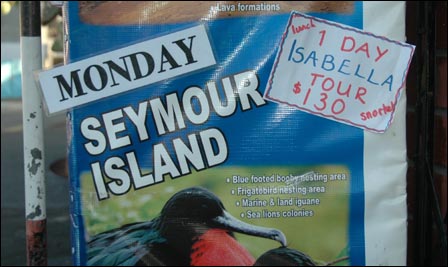
Tourism shifts from sea to land
In the 1960s, tourism was mostly ship-based - visitors would stay onboard and alight at sightseeing spots of choice. But there has since been a huge growth in air traffic, and many people now make Santa Cruz their base. Conservationists are worried about the impact this will have on the island.
All this week, BBC News will be reporting from the Galapagos Islands.
Text by David Shukman, photographs by Mark Georgiou and video by Rob Magee
 One-Minute World News

 E-mail this to a friend
  Printable version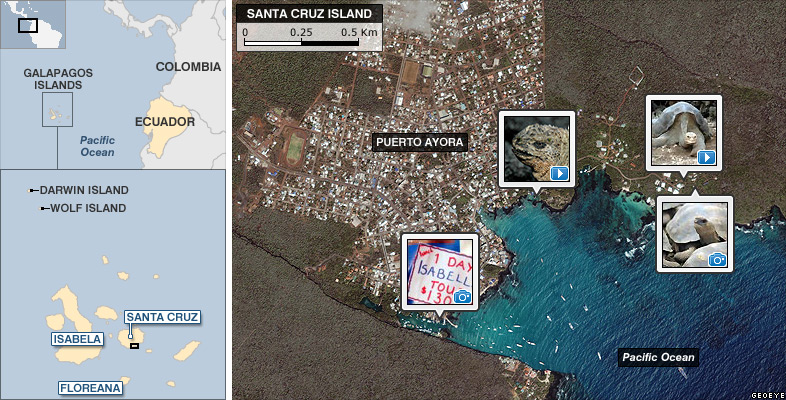



 BBC News


Bookmark with:
What are these?