|
 |
 | | | | | | ||||||||||||||||||||||||||||||||||||||||||||||||||||||||||||||||||||||||||||||||||||||||||||||||||||||||||||||||||||||||||||||||||||||||||||||||||||||||||||||||||||||||||||||||||||||||||
| | | You are in: Science/Nature | ||||||||||||||||||||||||||||||||||||||||||||||||||||||||||||||||||||||||||||||||||||||||||||||||||||||||||||||||||||||||||||||||||||||||||||||||||||||||||||||||||||||||||||||||||||||||||||
|
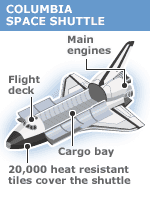
| | Friday, 14 February, 2003, 01:54 GMT Columbia 'puncture' theory examined  Nasa is narrowing down the possible causes The Columbia space shuttle almost certainly suffered a devastating puncture which allowed hot air inside the left wing, US investigators say. Columbia broke up upon re-entry on 1 February with the loss of its crew of seven in a disaster which has raised questions about the future of the International Space Station.
It is the first time the US space agency has hinted that the tragedy was probably not caused by the loss of a heat-resistant tile as originally thought, correspondents say. Investigators say they are now working on the theory that super-heated air, or plasma, managed to penetrate deep inside the wing during re-entry, effectively melting it. They were speaking after Nasa announced it had finally identified the bodies of all seven members of the crew. 'Substantial hole' Officials are not sure where a breach may have opened in Columbia's skin - but Nasa spokesman James Hartsfield pointed to the leading edge or elsewhere on the left wing, the fuselage or the left landing gear door.
"They do not, and have not pinpointed, any general location as to where that plasma flow would have to originate." Moments before the shuttle broke up, Mission Control noticed an unusually high heat build-up in the shuttle's left wing, which could have indicated missing or damaged tiles. But scientists say the loss of a tile could not have produced such an unusual temperature. A scientist at Purdue University's Aerospace Sciences Laboratory, Associate Professor Steven P Schneider, agreed with Nasa's new theory. "I think there was a substantial hole in the wing," he told the Associated Press. "That would not be at all surprising. All the sensors in the wing failed or gave bad readings." This is Nasa's first significant theory about the cause of the accident and it suggests the wing was more seriously damaged than previously thought, the BBC's Fergal Parkinson reports. One possibility being put forward by scientists is that the puncture was caused by a piece of space debris as Columbia started its descent. Landing gear theory Nasa's investigators have dismissed suggestions that Columbia's left landing gear was improperly lowered as it raced through Earth's atmosphere.
They were responding to reports that a sensor had shown the gear was down just 26 seconds before Columbia's destruction. Tyres are supposed to remain raised until the shuttle is about 200 feet (60 metres) over the runway and flying at 345 mph (555 km/h). Experts believe that if Columbia's gear had been lowered at that speed, the heat and rushing air would have sheared off Columbia's tires and led quickly to the spacecraft's destruction. But Nasa officials said on Thursday that two other sensors had shown the gear was still raised and they said that were confident that the unusual sensor reading quoted had been wrong. | |
See also:  13 Feb 03 | Science/Nature 11 Feb 03 | Science/Nature 07 Feb 03 | Americas 06 Feb 03 | Americas 05 Feb 03 | Americas 01 Feb 03 | Americas Internet links: The BBC is not responsible for the content of external internet sites Top Science/Nature stories now: Links to more Science/Nature stories are at the foot of the page. | ||||||||||||||||||||||||||||||||||||||||||||||||||||||||||||||||||||||||||||||||||||||||||||||||||||||||||||||||||||||||||||||||||||||||||||||||||||||||||||||||||||||||||||||||||||||||||
 | |
|  E-mail this story to a friend E-mail this story to a friend |
| |
| Links to more Science/Nature stories |
| | | ||
 | ||||
 | | Back to top
| ||
| ---------------------------------------------------------------------------------- To BBC Sport>> | To BBC Weather>> | To BBC World Service>> ---------------------------------------------------------------------------------- © MMIII | News Sources | Privacy |




 A substantial hole in the wing... would not be at all surprising