|
 |
 | | | | | | |||||||||||||||||||||||||||||||||||||||||||||||||||||||||||||||||||||||||||||||||||||||||||||||||||||||||||||||||||||||||||||||||||||||||
| | | You are in: Science/Nature | |||||||||||||||||||||||||||||||||||||||||||||||||||||||||||||||||||||||||||||||||||||||||||||||||||||||||||||||||||||||||||||||||||||||||||
|
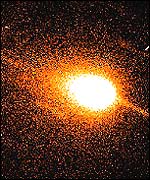
| | Tuesday, 31 December, 2002, 00:40 GMT Rosetta comet mission delayed  Rosetta has to launch inside a 19-day window The launch of one of the most daring space projects ever planned has been delayed. The Rosetta mission to orbit and land on a comet will not now take off on 12 January as scheduled - but several days later. The postponement is the result of the ongoing investigation into the loss of Europe's new super rocket, the Ariane 5-ECA, on its maiden flight earlier this month. Although the Rosetta probe is set to fly on an older version of the launcher, investigators will not give the mission the green light until they are absolutely sure what caused the 11 December failure. Observed anomaly The hope is that whatever led to the loss of Flight 157 three minutes after blast-off can be traced to new components in the super rocket. This would clear Rosetta to fly on the standard vehicle.
In a statement released late on Monday it said: "The inquiry board named by Arianespace, the European Space Agency (Esa) and France's CNES space agency to investigate the anomaly observed during Flight 157... will submit its final report to Arianespace on Monday 6 January, 2003. "Until then, the irreversible operations linked to Rosetta's launch have been suspended - which will result in a launch postponement of several days beyond the targeted date of Sunday 12 January." Enough speed The coming week will be a nervous one for the scores of scientists and engineers in Europe who have dedicated more than 10 years to the design and construction of Rosetta. Everyone connected with the project is acutely aware that the mission only has a very small window in which to launch. A lengthy delay would be disastrous. Because the Rosetta spacecraft has to follow a complex deep-space trajectory - swinging by Mars once and Earth twice - in order to build up the speed it needs to catch Comet Wirtanen, it must fly some time within the 19 days that start on 12 January. If the Rosetta spacecraft fails to launch in the window, the mission will almost certainly have to look for a new target. Senior Esa officials and British scientists connected with the Rosetta mission are scheduled to give a media conference in London next Monday. By then, the inquiry board should have reported its early findings into the loss of the Ariane 5-ECA, which veered off course 150 kilometres above the Earth, triggering its self-destruct mechanism, and dumping two satellites in the Atlantic Ocean. | |
See also:  30 Dec 02 | Science/Nature 28 Dec 02 | Science/Nature 27 Dec 02 | Science/Nature 12 Dec 02 | Science/Nature 12 Dec 02 | Science/Nature Internet links: The BBC is not responsible for the content of external internet sites Top Science/Nature stories now: Links to more Science/Nature stories are at the foot of the page. | |||||||||||||||||||||||||||||||||||||||||||||||||||||||||||||||||||||||||||||||||||||||||||||||||||||||||||||||||||||||||||||||||||||||||
|  |
|  E-mail this story to a friend E-mail this story to a friend |
 | |
| Links to more Science/Nature stories |
| | | ||
 | ||||
 | | Back to top
| ||
| ---------------------------------------------------------------------------------- To BBC Sport>> | To BBC Weather>> | To BBC World Service>> ---------------------------------------------------------------------------------- © MMIII | News Sources | Privacy |