|
 |
 | | | | | | ||||||||||||||||||||||||||||||||||||||||||||||||||||||||||||||||||||||||||||||||||||||||||||||||||||||||||||||||||||||||||||||||||||||||||||||||
| | | You are in: Science/Nature | ||||||||||||||||||||||||||||||||||||||||||||||||||||||||||||||||||||||||||||||||||||||||||||||||||||||||||||||||||||||||||||||||||||||||||||||||||
|
| | Wednesday, 18 December, 2002, 17:19 GMT 'Extinct' UK bat bounces back  Pipistrelle in flight: All UK bats are classed as threatened (Image: Hugh Clark/BCT)
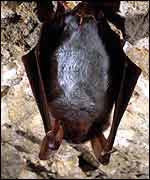
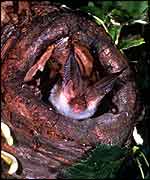
The animal, a young male greater mouse-eared bat, was found hibernating in Sussex, in southern England.
Its discovery has raised hope that the species may have managed to survive in the UK. An elderly female was found in January, 2001, not far from where the latest discovery was made. She died within a few days. She is thought possibly to have been a survivor of a group of up to 30 greater mouse-eared bats which used to frequent the hibernation site where the young male was found. Presumed extinct Before her, the last bat of the species known to have existed in the UK was an animal which wintered at the site from 1975 to 1988.
Greater mouse-eared bats declined sharply in north-west Europe during the 1970s and 1980s, though there is some evidence of a recovery since then. They are one of the largest European bats, with a wing-span of up to 45 centimetres (18 inches). They usually roost in large loft spaces during the summer, and feed mainly on beetles. Amy Coyte of the Bat Conservation Trust said the latest discovery was "immensely exciting". She said: "We hope this means that the greater mouse-eared bat is still breeding in the UK, and that this will encourage bat workers to look out for this species." Sound sleeper David King is a member of the Sussex Bat Group (SBG) whose members discovered the young male. He told BBC News Online: "We check well-known hibernation sites during the winter to monitor bat numbers. "A lot of species use this site, but the greater mouse-eared is the rarest bat we've ever found.
"Ringing the bat would have woken it, but it would have settled down again pretty quickly. When the temperature's below 6 Celsius they sleep anyway, because there are no insects around. Heard but not seen "We have quite strong hopes now that the greater mouse-eared bat is not extinct here after all. "I believe there's possibly a small but significant population of the bats still to find. We're all excited about it." Mr King works for a company, Stag Electronics, which makes bat detectors. These convert the ultrasonic sounds the bats make in echolocation into audio, allowing them to be identified and their movements monitored although they remain invisible to observers. Sixteen bat species (apart from the greater mouse-eared) are known to live in the UK. Two are classified as endangered, nine as vulnerable, and all are threatened. | |   See also: 25 Nov 02 | Scotland 11 Nov 02 | England 10 Oct 02 | England 09 Aug 02 | Science/Nature Internet links: The BBC is not responsible for the content of external internet sites Top Science/Nature stories now: Links to more Science/Nature stories are at the foot of the page. | ||||||||||||||||||||||||||||||||||||||||||||||||||||||||||||||||||||||||||||||||||||||||||||||||||||||||||||||||||||||||||||||||||||||||||||||||
 | |
|  E-mail this story to a friend E-mail this story to a friend |
| |
| Links to more Science/Nature stories |
| | | ||
 | ||||
 | | Back to top
| ||
| ---------------------------------------------------------------------------------- To BBC Sport>> | To BBC Weather>> | To BBC World Service>> ---------------------------------------------------------------------------------- © MMIII | News Sources | Privacy |






 I believe there's possibly a small but significant population of the bats still to find