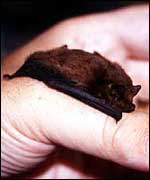
|
 |
 | | | | | | ||||||||||||||||||||||||||||||||||||||||||||||||||||||||||||||||||||||||||||||||||||||||||||||||||||||||||||||||||||||||||||||||||||||||||||||
| | | You are in: Science/Nature | ||||||||||||||||||||||||||||||||||||||||||||||||||||||||||||||||||||||||||||||||||||||||||||||||||||||||||||||||||||||||||||||||||||||||||||||||
|
| | Friday, 9 August, 2002, 09:44 GMT 10:44 UK British bats battle threats 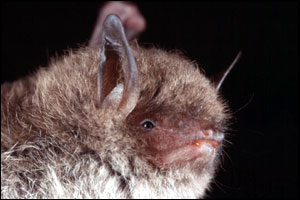 Daubenton's bat uses its tail to scoop insects from lakes and ponds (Image: John Kaczanow)
Their roosting places are often damaged or destroyed, either by accident or deliberately, and the insects they eat are also in decline. Scientists say bats constitute one-third of the UK's total number of land-based mammal species. Two conservation groups, the Woodland Trust and the Bat Conservation Trust, are working to raise awareness of the animals' plight. They say two of the 16 species found here are classed as endangered, with nine others threatened, despite the existence of UK and European legislation designed to protect them. The Mammal Society says: "Populations of the 14 species which breed in Britain have all declined in recent decades. Road to oblivion "Pipistrelle numbers fell by 60% between 1978 and 1986. Greater and lesser horseshoe bats are endangered, the barbastelle is very poorly known and the mouse-eared bat became extinct in 1991." The last mammal to have become extinct in the UK before 1991 is thought to have been the wolf, wiped out more than 250 years ago. The two trusts say bats have different roosting requirements at different times of year. They usually return to the same roost year after year. They choose trees, houses, bridges and caves, and woods with cracked and creviced ancient trees are important to them.
The rare barbastelle bat likes to roost behind pieces of bark, and depends on small moths. The pipistrelle, the smallest British bat, has been known to eat 3,000 midges in a single night. The trusts say many insects important for bats are declining because of pesticide use, loss of wild flowers, woodland and water, and the reduction in the number of wetland areas. Knowledge gaps Some bat species have been drastically reduced. There were an estimated 300,000 greater horseshoe bats in 1900, but probably just 3,000 or so by the late 1980s. In 1995 the UK Government launched the five-year National Bat Monitoring Programme, designed to develop an effective monitoring strategy for bat species resident in the UK. The Bat Conservation Trust says a lack of historical data means that "population trends of the 16 species of bats are, in general, poorly known". | | See also:  30 Jul 02 | England 18 Apr 02 | England 01 Mar 02 | England 05 Oct 02 | Science/Nature Internet links: The BBC is not responsible for the content of external internet sites Top Science/Nature stories now: Links to more Science/Nature stories are at the foot of the page. | ||||||||||||||||||||||||||||||||||||||||||||||||||||||||||||||||||||||||||||||||||||||||||||||||||||||||||||||||||||||||||||||||||||||||||||||
| |
|  E-mail this story to a friend E-mail this story to a friend |
| |
| Links to more Science/Nature stories |
| | | ||
 | ||||
 | | Back to top
| ||
| ---------------------------------------------------------------------------------- To BBC Sport>> | To BBC Weather>> | To BBC World Service>> ---------------------------------------------------------------------------------- © MMIII | News Sources | Privacy |