|
 |
 | | | | | | |||||||||||||||||||||||||||||||||||||||||||||||||||||||||||||||||||||||||||||||||||||||||||||||||||||||||||||||||||||||||||||||||||||||||||||||||||||||||||||||||||||||||||||||||||||||||||||||||||||||||||||||||||||||
| | | You are in: Science/Nature | |||||||||||||||||||||||||||||||||||||||||||||||||||||||||||||||||||||||||||||||||||||||||||||||||||||||||||||||||||||||||||||||||||||||||||||||||||||||||||||||||||||||||||||||||||||||||||||||||||||||||||||||||||||||||
|
| | Wednesday, 4 December, 2002, 09:22 GMT Millions wonder at southern eclipse 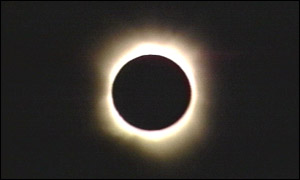 Australia's view of the 2002 total solar eclipse The only total eclipse of the Sun in 2002 has passed.
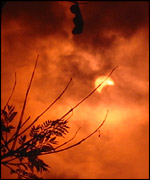
It was all over by 0912 GMT. Despite some indifferent weather in its path, the eclipse proved to be a magical show for the millions who saw it on the African continent and in the Australian outback. Confused batsThe BBC's Barnaby Phillips caught it from the banks of the Limpopo River between South Africa and Zimbabwe.
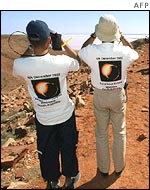
"The skies above the town of Messina were clear and blue, allowing for a marvellous experience. Tourists and South Africans climbed on top of rocky outcrops and gasped in wonder as the skies grew darker and darker. "When the Moon obscured the Sun... stars reappeared in the sky, and confused bats flew out from their roosts."
The Moon's dark shadow left the African continent little more than 20 minutes after it arrived. It then sped on across the Indian Ocean, where the instant of greatest eclipse occurred at 0731 GMT, about 2,000 kilometres south-east of Madagascar. But there would have been very few people - if any - on the 85-km-wide stretch of water that experienced the two minutes and four seconds of total darkness.
This occurred as the Sun was setting. The late yellow-red disc slipped behind the Moon to produce some dramatic colours. About 30,000 people had descended on the small farming and fishing town of Ceduna, 900 km (560 miles) west of Adelaide, to see the eclipse. All of the town's hotels had been booked for two years by scientists, astronomy buffs and tourists; caravan parks were overflowing and tour companies had set up two small tent cities near the waterfront. People experienced 33 seconds of total darkness. "Oh my God," gasped one woman. "What a fantastic sight," said another, when only the corona - the Sun's outer atmosphere - was visible. T-shirt sales Total solar eclipses happen on Earth about once a year.
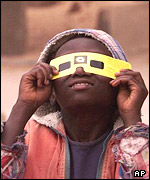
The current event was visible only in the Southern Hemisphere. Skywatchers in Angola, Zambia, Namibia, Botswana, Zimbabwe, South Africa and Mozambique were in the path of totality. The eclipse had been billed as a major tourism draw for the region, where towns along the path set up special festivals and travel companies packed tourists into hotels, game lodges and national parks. T-shirts proclaimed "Africlipse". Next time In Angola's capital of Luanda, one of the first areas to enter the eclipse zone, scattered groups of skywatchers gathered on the beach to watch the Sun disappear almost as soon as it had come above the horizon. In Zimbabwe, hundreds of local and foreign viewers witnessed the eclipse in the southern town of Beitbridge, on the border with South Africa. And in Mozambique, tourists flocked to the Indian Ocean beaches of the popular tourist town of Xai-Xai to wave goodbye to the Moon's shadow as it headed out to sea. There is another total eclipse in November next year, but this will occur over Antarctica and so will be seen by very few people. The next total eclipse over Africa will happen on 29 March. 2006. | |
See also:  26 Nov 02 | Science/Nature Top Science/Nature stories now: Links to more Science/Nature stories are at the foot of the page. | |||||||||||||||||||||||||||||||||||||||||||||||||||||||||||||||||||||||||||||||||||||||||||||||||||||||||||||||||||||||||||||||||||||||||||||||||||||||||||||||||||||||||||||||||||||||||||||||||||||||||||||||||||||||
| |
|  E-mail this story to a friend E-mail this story to a friend |
| |
| Links to more Science/Nature stories |
| | | ||
 | ||||
 | | Back to top
| ||
| ---------------------------------------------------------------------------------- To BBC Sport>> | To BBC Weather>> | To BBC World Service>> ---------------------------------------------------------------------------------- © MMIII | News Sources | Privacy |