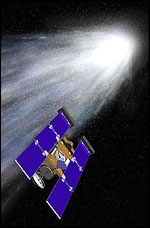
|
 |
 | | | | | | |||||||||||||||||||||||||||||||||||||||||||||||||||||||||||||||||||||||||||||||||||||||||||||||||||||||||||||||||||||||||||||||||||||||
| | | You are in: Science/Nature | |||||||||||||||||||||||||||||||||||||||||||||||||||||||||||||||||||||||||||||||||||||||||||||||||||||||||||||||||||||||||||||||||||||||||
|
| | Tuesday, 5 November, 2002, 10:33 GMT Probe returns asteroid image 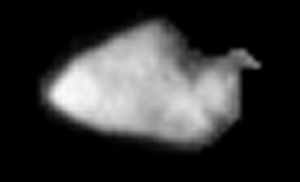 Stardust flew within about 3,300 kilometres The spaceprobe Stardust has sent back an image of the asteroid named after holocaust victim Anne Frank.
Stardust deployed all its instruments, including the dust collector that will grab samples of the comet for later return to Earth. The probe's weekend encounter with asteroid Annefrank shows the rock to be larger than expected and to have a dimmer surface. "We performed a full dress rehearsal with the cometary dust collector deployed, the spacecraft poised in its flyby attitude and with all science instruments on," said Stardust's principal investigator, Professor Donald Brownlee of the University of Washington, Seattle, US. Large craters Stardust flew within about 3,300 kilometres (2,050 miles) of the asteroid on Saturday. The data returned to Earth from the probe show the rock to about eight kilometres (5 miles) in length, twice the predicted size from Earth-based observations.
Stardust visually tracked Annefrank for about 30 minutes as it flew past the asteroid on Saturday at a relative speed of about 7 km (4 miles) per second. The image presented on this page was taken shortly before the closest approach. Comet dust Although no dust was anticipated near the asteroid, the spacecraft's dust instruments were in use as they will be at Comet Wild 2. The dust collector was open and the dust counter from the University of Chicago and dust mass spectrometer from Germany were also turned on. Data will continue to be returned to Earth during this week. Stardust's scientists and engineers believe the weekend's exercise will maximise the chances of success during the 2004 encounter with Comet Wild 2. All the early indications suggest their mission is in peak condition. "The spacecraft performed every command perfectly," said Allan Cheuvront, Stardust spacecraft systems engineer at Lockheed. And Lockheed's David Gingerich, a flight software specialist who tested the tracking software, added: "Its performance was executed just like the coach drew it on the blackboard." The probe will meet up with Comet Wild 2 in January 2004 and gather samples of dust to bring back to Earth in January 2006. It is hoped the results of the mission will help answer fundamental questions about the origins of the Solar System. | | See also:  04 Nov 02 | Science/Nature 01 Nov 02 | Science/Nature 08 Aug 02 | Science/Nature 03 May 00 | Science/Nature 23 Feb 00 | Science/Nature Internet links: The BBC is not responsible for the content of external internet sites Top Science/Nature stories now: Links to more Science/Nature stories are at the foot of the page. | |||||||||||||||||||||||||||||||||||||||||||||||||||||||||||||||||||||||||||||||||||||||||||||||||||||||||||||||||||||||||||||||||||||||
| |
|  E-mail this story to a friend E-mail this story to a friend |
| |
| Links to more Science/Nature stories |
| | | ||
 | ||||
 | | Back to top
| ||
| ---------------------------------------------------------------------------------- To BBC Sport>> | To BBC Weather>> | To BBC World Service>> ---------------------------------------------------------------------------------- © MMIII | News Sources | Privacy |