
|
 |
 | | | | | | |||||||||||||||||||||||||||||||||||||||||||||||||||||||||||||||||||||||||||||||||||||||||||||||||||||||||||||||||||||||||||||||||||||||||||||||
| | | You are in: Science/Nature | |||||||||||||||||||||||||||||||||||||||||||||||||||||||||||||||||||||||||||||||||||||||||||||||||||||||||||||||||||||||||||||||||||||||||||||||||
|
| | Friday, 1 November, 2002, 13:00 GMT Probe set for asteroid flyby 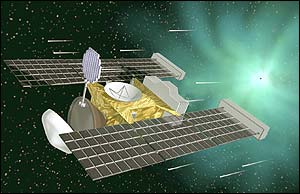 Stardust's main mission is to a comet
Stardust will be nearly 3,220 km (2,000 miles) away at its closest approach travelling at six km (four miles) per second. Little science is expected from the flyby. At best, the probe will transmit low-resolution, black-and-white pictures of the asteroid Dress rehearsal The encounter is set for 04.50 GMT on 2 November. During it, Stardust will keep its distance to assure it is not damaged by an undiscovered Annefrank companion asteroid or any nearby dust or debris. The point of the exercise is to uncover any problems with Stardust's target acquisition, autonomous navigation and science instrument operations before the critical comet flyby. "This is a great opportunity for us," says Stardust principal investigator Donald Brownlee of the University of Washington. "It's like a dress rehearsal for a wedding. You expect everything to go as planned, but just in case you'd like to know ahead of time," he says. Sample return Stardust is an ambitious but low-cost mission to capture the first samples from a comet, as well as grains of interstellar dust, and return them to Earth. If successful, the probe will return to Earth and parachute its samples back in January 2006. During the Annefrank flyby, Stardust will run through the exact sequence planned for the comet encounter, with science instruments all running and relaying data at high speeds for the first time since the space probe's launch. "Ideally, everything will work, but my guess is we'll have some lessons learned and then we'll have over a year to fix it before we get to Comet Wild-2," said Stardust mission director Tom Duxbury. The Annefrank images will not be very detailed. At best the asteroid image will be just 10 to 20 pixels across. Stardust was launched in February 1999. The spacecraft already has collected grains of interstellar dust. It is the first US sample-return mission since the last Moon landing in 1972. Asteroid 5535 was discovered by prolific German asteroid hunter Karl Reinmuth in March 1942 but was not named Annefrank until long after World War II. | | See also:  08 Aug 02 | Science/Nature 03 May 00 | Science/Nature 23 Feb 00 | Science/Nature Internet links: The BBC is not responsible for the content of external internet sites Top Science/Nature stories now: Links to more Science/Nature stories are at the foot of the page. | |||||||||||||||||||||||||||||||||||||||||||||||||||||||||||||||||||||||||||||||||||||||||||||||||||||||||||||||||||||||||||||||||||||||||||||||
| |
|  E-mail this story to a friend E-mail this story to a friend |
| |
| Links to more Science/Nature stories |
| | | ||
 | ||||
 | | Back to top
| ||
| ---------------------------------------------------------------------------------- To BBC Sport>> | To BBC Weather>> | To BBC World Service>> ---------------------------------------------------------------------------------- © MMIII | News Sources | Privacy |






