
|
 |
 | | | | | | ||||||||||||||||||||||||||||||||||||||||||||||||||||||||||||||||||||||||||||||||||||||||||||||||||||||||||||||||||||||||||||||||||||
| | | You are in: Science/Nature | ||||||||||||||||||||||||||||||||||||||||||||||||||||||||||||||||||||||||||||||||||||||||||||||||||||||||||||||||||||||||||||||||||||||
|
| | Tuesday, 15 October, 2002, 16:37 GMT 17:37 UK Flying crabs probe zero-G secrets 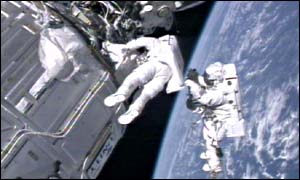 The research could help humans in space An experiment in which crabs were subjected to microgravity in a diving plane could one day help robots and humans work better in space. A team of undergraduates from the University of Aberdeen, UK, managed to secure a research slot on a European Space Agency plane for themselves and their shellfish. When an aircraft follows a parabolic downward dive, its passengers begin to float about as if they are in zero, or near zero, gravity environment. It is one of the few ways of simulating the experience of space without leaving the atmosphere. The crabs - mostly common UK shore crabs (Carcinus maenus) - were chosen for the experiment because of their primitive method of adjusting their balance. This may, say the researchers, provide a good model both for future robots designed to work in a zero-gravity location, and for further understanding the human response to such conditions. Wired up The crabs were wired to electrodes designed to measure activity in a particular part of their brains associated with their sense of balance. The parabolic dives placed the crabs both under a 2 Gs force, and also almost zero Gs for more than 20 seconds. At the same time, their tenuous grip on terra firma was put under further pressure by placing them on an angled rotating plate. The crustacean subjects appeared remarkably unperturbed by the whole experience, according to researcher Roberto Araujo. He told BBC News Online: "They didn't move at all - but there was activity in the right part of their brains." Ancient balance He said that the result did have relevance both to humans and robots. "The crabs are a very good model for our own vestigial balance system. "We need to know more about this system, because balance in microgravity is a major problem in spaceflight." While these crabs were released back into the wild following the experiments in Bordeaux, France, the team from Aberdeen hopes that more crabs will be gathered for further tests in a European Space Agency centrifuge. | | See also:  27 Mar 00 | Science/Nature 08 Sep 02 | Science/Nature 02 Aug 02 | Sci Tech Internet links: The BBC is not responsible for the content of external internet sites Top Science/Nature stories now: Links to more Science/Nature stories are at the foot of the page. | ||||||||||||||||||||||||||||||||||||||||||||||||||||||||||||||||||||||||||||||||||||||||||||||||||||||||||||||||||||||||||||||||||||
| |
|  E-mail this story to a friend E-mail this story to a friend |
| |
| Links to more Science/Nature stories |
| | | ||
 | ||||
 | | Back to top
| ||
| ---------------------------------------------------------------------------------- To BBC Sport>> | To BBC Weather>> | To BBC World Service>> ---------------------------------------------------------------------------------- © MMIII | News Sources | Privacy |




