|
 |
 | | | | | | |||||||||||||||||||||||||||||||||||||||||||||||||||||||||||||||||||||||||||||||||||||||||||||||||||||||||||||||||||||||||||||||||||||||||||||||||||
| | | You are in: Science/Nature | |||||||||||||||||||||||||||||||||||||||||||||||||||||||||||||||||||||||||||||||||||||||||||||||||||||||||||||||||||||||||||||||||||||||||||||||||||||
|
| | Monday, 14 October, 2002, 12:31 GMT 13:31 UK Norwegian whalers' determined position 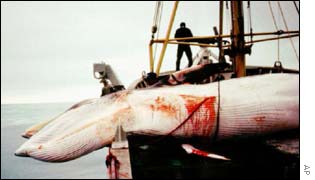 Minke whale hauled aboard a Norwegian whaling ship
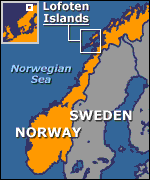
This was the first international trade in whale since a global moratorium in 1988 - and it outraged foreign governments and environmentalists. Myklebust dismisses them out of hand. He reminds them that many scientists accept that the minke species is not endangered. But, he argues, coastal communities like his could well be if the four-month-long whaling season stopped, as families here rely on the hunt for a third of their annual incomes. Best of both "Whale hunting is as important as any other fishing for this local community of 1,500 inhabitants," he explains. "All employment is equally important, whether generated by whaling or fishing. Whaling is part of our history and it has a great significance for this community." 700 km north, in the remote Lofoten Islands, the Norwegian Whalers' Union (NWU) reports that this season - mid May to early September - Norway's 35 licensed trawlers caught 634 minkes from a government-set quota of 671.
There's around $5,000 worth of meat on each mammal, but there's also $2,000 worth of blubber, which Norwegians don't like. However, over in the huge Japanese market, blubber is a much valued delicacy. "That's the product that is best paid when it come to Japan," says Bjorn Bendikson, Vice President of the NWU. "So if we could trade with Japan we could have the best from both countries; the best prices for the meat in Norway and the best prices for the blubber in Japan and in that matter we could get more economy out of each whale that's been shot." Toxic chemicals At the local restaurant in Reine, Lofoten, whale steaks are on the grill most nights of the week. Served up with lightly steamed vegetables, dressed with a rich creamy sauce, the meat is much appreciated here. Its texture is more like cow's liver than beef steak. It smells more like game.
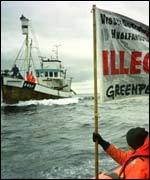
Environmentalists believe that this market is so lucrative that quotas for whale hunts will increase and hunters will be tempted to cheat. Their tactic is to persuade consumers to stay clear of blubber - reminding them of all the nasty chemicals in the northern seas that are interfering with the reproductive systems of fish and polar bears. "The main thing for us is to stop the Norwegian exports to Japan, which has been successful so far by informing the Japanese consumers of the high level of various toxins, in particular the blubber from the meat from Norway," says Frode Pleym an Oslo based activist with Greenpeace Norway. Sustainable whaling Meanwhile, here in Lofoten, whalers have a thousand tonnes of blubber in cold storage waiting for a market. It is all cut and packed into boxes of a manageable size - and these are piled sky high.
While much of the world regards the whale as a creature that must be protected, to communities here on Norway's remote coast, their catch is a sustainable resource that supplies food for the table and cash for the bank. The whalers agree that the industry was well out of order in the past - especially those ships hunting in the Antarctic that brought some species to near extinction. The ban, they say, was necessary, but as far as minke are concerned, less than 2% of the stock is killed each year - which is well within a sustainable safety margin. Political lobbies So now, backed by Norway's government, they're determined to face off international opposition and get that lucrative Japanese market open for the blubber. "The Norwegian government's policy is to normalise whaling," says Johan Williams, the director general at Norway's Ministry of Fisheries. "We look upon the harvesting of whales as we look upon the harvesting of other living marine resources which should and could be undertaken as long as it is being done on a scientifically based sustainable basis." Even if Norway can win the argument about minke whale harvesting being sustainable, it is still up against a well funded political lobby that seems to regard hunting any whale as unethical - unless done by American or Russian native peoples. The Norwegians complain of culinary imperialism by countries that kill other animals, like lamb, for food. And as for attacks from some governments citing a disregard for nature and the environment, the whalers are quick to respond that some of their fiercest critics are the world's biggest polluters. | | See also:  13 Oct 02 | Science/Nature 24 May 02 | Asia-Pacific 24 May 02 | In Depth 24 May 02 | Asia-Pacific 23 May 02 | Asia-Pacific Internet links: The BBC is not responsible for the content of external internet sites Top Science/Nature stories now: Links to more Science/Nature stories are at the foot of the page. | |||||||||||||||||||||||||||||||||||||||||||||||||||||||||||||||||||||||||||||||||||||||||||||||||||||||||||||||||||||||||||||||||||||||||||||||||||
| |
|  E-mail this story to a friend E-mail this story to a friend |
| |
| Links to more Science/Nature stories |
| | | ||
 | ||||
 | | Back to top
| ||
| ---------------------------------------------------------------------------------- To BBC Sport>> | To BBC Weather>> | To BBC World Service>> ---------------------------------------------------------------------------------- © MMIII | News Sources | Privacy |