
|
 |
 | | | | | | |||||||||||||||||||||||||||||||||||||||||||||||||||||||||||||||||||||||||||||||||||||||||||||||||||||||||||||||||||||||||||||||||||||||||||||||
| | | You are in: Science/Nature | |||||||||||||||||||||||||||||||||||||||||||||||||||||||||||||||||||||||||||||||||||||||||||||||||||||||||||||||||||||||||||||||||||||||||||||||||
|
| | Friday, 27 September, 2002, 09:27 GMT 10:27 UK Plans to decode dogs 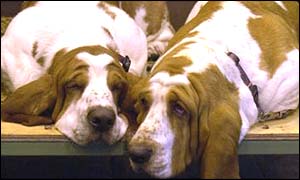 The dog may follow the mouse and us
With the genetic sequences of humans and mice almost complete, the Human Genome Project is looking for new contenders. Officials in the United States have put dogs near the top of the list, after some vigorous debate among scientists.
Reading the full genetic code of our animal relatives should shed light on human health and behaviour. But with so many comparative organisms to choose from, the US National Human Genome Research Institute (NHGRI) called for submissions from scientists around the world. Good pedigree Matthew Binns of the Animal Health Trust in Newmarket in the south of England helped put together a white paper calling for the dog genome to be sequenced. He is excited at the prospect. "Pedigree dog breeds are essentially like isolated human populations," he said. "They're a closed breeding pool. "They have real advantages for studying some of the complex diseases that are hard to study in humans." The dog sequencing lobby is led by researchers at the Fred Hutchinson Cancer Research Center and the University of California, Berkeley, US. They say understanding the canine genome will allow for improved understanding of human health and behaviour. Dogs suffer from about 400 inherited diseases, most of which have homologous conditions in humans. "The dog can contribute to human health," Dr Binns told BBC News Online. "We think in the future it will increasingly do so." There are also potential benefits for dogs themselves, says Dr Jeff Sampson, canine genetics coordinator of the Kennel Club in the UK. There is "huge potential" for wiping out diseases in pedigree dogs, he says. "Within a matter of a few generations of rigorous DNA testing and selection of appropriate breeding mates you could very quickly remove the faulty gene from the breed's gene pool." Better burgers Being on the priority list doesn't guarantee a slot on the world's biggest genome sequencing machines. But it means dogs should get a look in if lab time and funds become available. The task then will be to choose the breed. Likely candidates include the beagle, the doberman and the poodle - which has already been sequenced in part. If dogs don't make it off the drawing board, they may be usurped by another four-legged mammal. Cows were added to the list by the NHGRI at the same time as dogs. Decoding the cow could lead to safer food and better steaks, say proponents. | | See also:  05 Jul 99 | Science/Nature 29 Nov 99 | Science/Nature 06 May 02 | Science/Nature Internet links: The BBC is not responsible for the content of external internet sites Top Science/Nature stories now: Links to more Science/Nature stories are at the foot of the page. | |||||||||||||||||||||||||||||||||||||||||||||||||||||||||||||||||||||||||||||||||||||||||||||||||||||||||||||||||||||||||||||||||||||||||||||||
| |
|  E-mail this story to a friend E-mail this story to a friend |
| |
| Links to more Science/Nature stories |
| | | ||
 | ||||
 | | Back to top
| ||
| ---------------------------------------------------------------------------------- To BBC Sport>> | To BBC Weather>> | To BBC World Service>> ---------------------------------------------------------------------------------- © MMIII | News Sources | Privacy |






