
|
 |
 | | | | | | |||||||||||||||||||||||||||||||||||||||||||||||||||||||||||||||||||||||||||||||||||||||||||||||||||||||||||||||||||||||||||||||||||||||||||||||||||||||||||||||||||||||||||||
| | | You are in: Science/Nature | |||||||||||||||||||||||||||||||||||||||||||||||||||||||||||||||||||||||||||||||||||||||||||||||||||||||||||||||||||||||||||||||||||||||||||||||||||||||||||||||||||||||||||||||
|
| | Monday, 19 August, 2002, 22:09 GMT 23:09 UK Better rice, less global warming 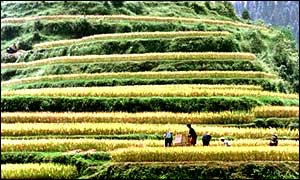
Rice plants which produce higher yields make less of the potent greenhouse gas methane, researchers have discovered. Plants which use the carbon they absorb from the atmosphere efficiently put less carbon into the soil, where it can be converted into methane. Methane is the second most important greenhouse gas, responsible for about 20% of global warming. The scientists say their findings could lead to new ways of growing rice which will curb global warming as well as producing higher yields. Plant pollution Paddy fields full of rice are among the world's biggest producers of methane, contributing around 10% of global emissions. Methane, a compound of carbon and hydrogen, is produced by bacteria in the soil. Some of the carbon enters the soil from the roots of the rice plants, which in turn take it from the atmosphere through photosynthesis. Now scientists from Wageningen University in the Netherlands, the Fraunhofer Institute in Germany and the International Rice Research Institute in the Philippines have discovered that plants which channel carbon into making flowers and grain put less of it into the soil. In experiments inside greenhouses, they found that the crucial factor is the number of spikelets which a plant makes. A spikelet is a structure which holds a number of flowers and, later, grain. Writing in the journal The Proceedings of the National Academy of Sciences, they say their discovery "provides opportunities to mitigate methane emissions by optimising rice productivity". Cleaning the fields Rice is the staple crop of around half of the world's population. Yields vary widely, with some fields producing around eight tonnes per hectare, others only three. But even as researchers are developing new strains which produce more grain, global warming is threatening to bring yields down, as plants produce fewer spikelets in higher temperatures. In a commentary in the same journal, Dr Ronald Sass from Rice University in Houston and Dr Ralph Cicerone from the University of California at Irvine describe the research as "timely and a call to action". Understanding the links between temperature, spikelet formation and methane production could, they write, help researchers to develop new strains which can channel more atmospheric carbon into the rice itself, and less into methane production in the soil. However Dr Robin Matthews of Cranfield University in the UK cautioned that it may be difficult to extrapolate these greenhouse experiments to the real world. "It's a complex situation, and there may be other factors which come into play when you grow rice in open fields," he said. | |
See also:  03 Jun 02 | Americas 19 Aug 02 | Asia-Pacific 05 Jul 02 | Africa 04 Apr 02 | Science/Nature 04 Apr 02 | Science/Nature 28 Mar 02 | Africa Internet links: The BBC is not responsible for the content of external internet sites Top Science/Nature stories now: Links to more Science/Nature stories are at the foot of the page. | |||||||||||||||||||||||||||||||||||||||||||||||||||||||||||||||||||||||||||||||||||||||||||||||||||||||||||||||||||||||||||||||||||||||||||||||||||||||||||||||||||||||||||||
| |
|  E-mail this story to a friend E-mail this story to a friend |
| |
| Links to more Science/Nature stories |
| | | ||
 | ||||
 | | Back to top
| ||
| ---------------------------------------------------------------------------------- To BBC Sport>> | To BBC Weather>> | To BBC World Service>> ---------------------------------------------------------------------------------- © MMIII | News Sources | Privacy |






