|
 |
 | | | | | | |||||||||||||||||||||||||||||||||||||||||||||||||||||||||||||||||||||||||||||||||||||||||||||||||||||||||||||||||||||||||||||||||||||||||||||||||
| | | You are in: Science/Nature | |||||||||||||||||||||||||||||||||||||||||||||||||||||||||||||||||||||||||||||||||||||||||||||||||||||||||||||||||||||||||||||||||||||||||||||||||||
|
| | Thursday, 1 August, 2002, 16:41 GMT 17:41 UK Atlas maps the web of life 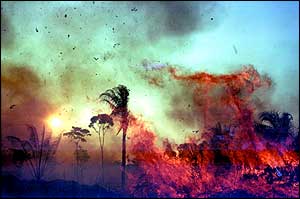 Forest fire: We are destroying natural wealth before we know it is there (Image: M Friedlander/Unep/Topham)
It shows that since 1850 humans have affected almost half the planet's land.
Entitled the World Atlas Of Biodiversity: Earth's Living Resources For The 21st Century, it is the work of the United Nations Environment Programme World Conservation Monitoring Centre (Unep-WCMC), based in Cambridge, UK. It has been collated from the centre's research, the work of independent scientists, and governmental and other reports. Planetary bulldozers The centre says the data will be made available to users by a unique interactive mapping service accessible from the Unep-WCMC website. This will let them create their own maps comparing subjects from wilderness density to human population.
The atlas details extinctions past and present:
The atlas says humans have altered and had a direct impact on almost 47% of the global land area in the last 150 years. Fair shares One scenario suggests that biodiversity will be threatened on almost 72% of the land area by 2032.
Unep's executive director, Dr Klaus Toepfer, said humanity was now diverting about 40% of the Earth's productivity to its own uses, much of it in an unsustainable way. He said: "We must address the issue of genetic resource-sharing by giving developing countries an economic incentive to protect wildlife, paying them properly for the plants and animals whose genes get used in new drugs or crops." Bouncing back The atlas also shows how roads and settlements are spreading into former wildernesses like the Amazon, the Arctic and the deserts. Brian Groombridge, co-author of the atlas, said: "There is little true wilderness left to support the expansion of the human population on this planet." But the director of Unep-WCMC, Dr Mark Collins, said: "We know enough about the distribution of species and ecosystems to ensure that the world's biodiversity is managed effectively. "Give nature half a chance, and it will take care of itself." | | See also:  02 Jul 02 | Science/Nature 22 May 02 | Science/Nature 22 May 02 | Science/Nature 21 May 02 | Science/Nature 16 Feb 01 | San Francisco 28 Sep 00 | Science/Nature Internet links: The BBC is not responsible for the content of external internet sites Top Science/Nature stories now: Links to more Science/Nature stories are at the foot of the page. | |||||||||||||||||||||||||||||||||||||||||||||||||||||||||||||||||||||||||||||||||||||||||||||||||||||||||||||||||||||||||||||||||||||||||||||||||
| |
|  E-mail this story to a friend E-mail this story to a friend |
| |
| Links to more Science/Nature stories |
| | | ||
 | ||||
 | | Back to top
| ||
| ---------------------------------------------------------------------------------- To BBC Sport>> | To BBC Weather>> | To BBC World Service>> ---------------------------------------------------------------------------------- © MMIII | News Sources | Privacy |