|
 |
 | | | | | | ||||||||||||||||||||||||||||||||||||||||||||||||||||||||||||||||||||||||||||||||||||||||||||||||||||||||||||||||||||||||||||||||||||||||||||||||||||||||||||||||||||||||||||||||||||||||||||||||||
| | | You are in: Science/Nature | ||||||||||||||||||||||||||||||||||||||||||||||||||||||||||||||||||||||||||||||||||||||||||||||||||||||||||||||||||||||||||||||||||||||||||||||||||||||||||||||||||||||||||||||||||||||||||||||||||||
|
| | Monday, 8 July, 2002, 10:13 GMT 11:13 UK Artificial star enhances telescope's vision Adaptive optics make VLT images as sharp as Hubble
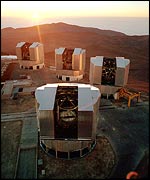
Each unit is hooked into three different instruments and each has the ability to see objects four billion times fainter than can be seen by the naked eye. The mirrors used are the largest single mirrors of any telescope ever built. The VLT's nearest rivals - the Keck twins on Mauna Kea, Hawaii - use 10-metre mirrors, but these are made up of many small hexagonal sections. The VLT mirrors, by comparison, come as one single piece, each just 17 centimetres thick but weighing 20 tonnes. Computer controlled A sophisticated technique called "active optics" has been used to enhance the image quality. Some 150 tiny computer-controlled actuators sit underneath the main mirror. Any blurring of the image is detected automatically and, because the mirror is relatively thin, it can be easily adjusted to keep the curved reflecting surface in the optimum shape.
Mirrors on the ground may be easier and cheaper to build than those sent into space, but they inevitably view the heavens through the turbulent atmosphere, which distorts light and blurs images. An adaptive optics system is installed on the Yepun telescope, or UT 4. (The telescopes have been given names from the Mapuche language of the Chilean Indians, but astronomers and engineers tend to stick with the more mundane Unit Telescope 1,2,3 and UT 4). Aircraft warning The optics system, called the Nasmyth Adaptive Optics System, measures distortions in the light from a reference star near the object being observed and the main mirror is altered automatically to compensate. The problem is that a suitably bright reference star is not always available. So VLT engineers intend to introduce their own. The plan is, by the end of next year, to have installed a sodium laser on the secondary mirror of UT 4, to produce an artificial star some 96 kilometres (60 miles) high. A laser is designed to agitate sodium atoms in the atmosphere there to produce an artificial star that will be too faint to be seen by the naked eye, but will be easily detectable by the telescope. The system is under construction now and negotiations are already underway with local air traffic control. Cameras may have to be installed at the observatory to detect approaching aircraft and switch the laser off if required. 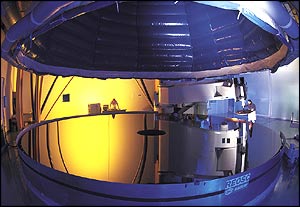 The main mirrors come as a single piece | |
Internet links:  The BBC is not responsible for the content of external internet sites Top Science/Nature stories now: Links to more Science/Nature stories are at the foot of the page. | ||||||||||||||||||||||||||||||||||||||||||||||||||||||||||||||||||||||||||||||||||||||||||||||||||||||||||||||||||||||||||||||||||||||||||||||||||||||||||||||||||||||||||||||||||||||||||||||||||
| |
|  E-mail this story to a friend E-mail this story to a friend |
| |
| Links to more Science/Nature stories |
| | | ||
 | ||||
 | | Back to top
| ||
| ---------------------------------------------------------------------------------- To BBC Sport>> | To BBC Weather>> | To BBC World Service>> ---------------------------------------------------------------------------------- © MMIII | News Sources | Privacy |