|
 |
 | | | | | | |||||||||||||||||||||||||||||||||||||||||||||||||||||||||||||||||||||||||||||||||||||||||||||||||||||||||||||||||||||||||||||||||||||||||||||||||
| | | You are in: Science/Nature | |||||||||||||||||||||||||||||||||||||||||||||||||||||||||||||||||||||||||||||||||||||||||||||||||||||||||||||||||||||||||||||||||||||||||||||||||||
|
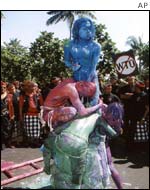
| | Friday, 7 June, 2002, 20:15 GMT 21:15 UK Environment talks end in deadlock Poverty was a key issue of the talks Negotiations at a UN conference on cutting poverty and protecting the environment have ended without resolution. The talks on the Indonesian island of Bali were expected to finalise an action plan in preparation for the summit of world leaders being held in Johannesburg in less than three months time. It had been clear for some time that the meeting was in trouble.
Even the arrival of senior ministers on Wednesday failed to break the deadlock, and now the delegates have been forced to concede defeat. Disappointment The chairman of the meeting, former Indonesian Environment Minister Emil Salim, expressed his disappointment, saying there had been a lack of good faith amongst the negotiators. "We have tried until the last hour to bridge the gap," Mr Salim said, adding he could now see how divided the world was between the rich and poor nations.
Another sticking point was a call from developing countries for a greater commitment by richer nations to widen their markets to trade and the transfer of technology. But Lynn Schloesser, a member of the US business delegation, said his country would not go beyond commitments it had made in Monterrey and at the World Trade Organisation summit in Doha. "Trade and finance representatives from all countries have agreed on a programme and it needs to be allowed to go forward without intervention from here," he said. Forthcoming summit Mr Salim said the failure of the talks in Bali would mean that the Johannesburg summit would be difficult. But he added: "This is not the end of the road. It is not a disaster."
The UN, which is organising the summit, has stressed it must be about ensuring action on the ground - with clear targets and timetables for preventing further environmental damage. In particular, the aim is to ensure that economic development around the world is sustainable. The other broad aim is to tackle poverty, one of the key causes of environmental destruction. But the failure in Bali to agree to set targets or to provide the necessary money casts the summit's priorities into jeopardy. The BBC's correspondent at the talks, Richard Galpin, says that what should have been a blueprint for real change to be endorsed at the Johannesburg summit is more a re-statement of broad principles - precisely what the UN did not want. | |
See also:  27 May 02 | Asia-Pacific 04 Jan 02 | Americas 02 Jun 02 | Business 17 May 02 | Science/Nature Internet links: The BBC is not responsible for the content of external internet sites Top Science/Nature stories now: Links to more Science/Nature stories are at the foot of the page. | |||||||||||||||||||||||||||||||||||||||||||||||||||||||||||||||||||||||||||||||||||||||||||||||||||||||||||||||||||||||||||||||||||||||||||||||||
| |
|  E-mail this story to a friend E-mail this story to a friend |
| |
| Links to more Science/Nature stories |
| | | ||
 | ||||
 | | Back to top
| ||
| ---------------------------------------------------------------------------------- To BBC Sport>> | To BBC Weather>> | To BBC World Service>> ---------------------------------------------------------------------------------- © MMIII | News Sources | Privacy |