|
 |
 | | | | | | |||||||||||||||||||||||||||||||||||||||||||||||||||||||||||||||||||||||||||||||||||||||||||||||||||||||||||||||||||||||||||||||||||||||||||||||||||||
| | | You are in: Programmes: Inside Money | |||||||||||||||||||||||||||||||||||||||||||||||||||||||||||||||||||||||||||||||||||||||||||||||||||||||||||||||||||||||||||||||||||||||||||||||||||||||
|
| |  Friday, 2 August, 2002, 09:34 GMT 10:34 UK Friday, 2 August, 2002, 09:34 GMT 10:34 UK Minister rejects benefit criticism 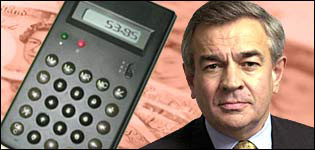 The Work and Pensions Minister rejected the ideas
Benefit levels have not been properly reviewed since the Welfare State was set up in 1948. There are growing calls for a modern, transparent system, which would reveal any gap between ideal levels of income and what the government actually pays.
BBC Radio 4's Inside Money spoke to a number of experts and campaigners, all of whom agree the system is no longer relevant to modern society and must change. But confronted with the investigation findings, Work and Pensions Minister Malcolm Wicks dismissed the suggestions as "Social science fiction rather than social science fact." Assistance scales National Assistance Scales were based on a 'basket of essential goods' devised by Seebohm Rowntree for Sir William Beveridge when he founded the Welfare State in the 1940s. The scales were devised to determine levels of support for the unemployed, sick, retired or widowed. Although governments have adjusted individual benefits, there has been no wholesale review of the basis on which they are set. York University's Professor Jonathan Bradshaw explained that although governments have increased benefits in an ad hoc manner, "No-one has ever actually sat down and officially reviewed the adequacy of the scale rates." Professor Bradshaw suggested a method many experts in his field have used as a comparative model when assessing the adequacy of the current system.
'Budget standards' are a selection of essential goods and services consisting of food items, clothing, fuel, leisure goods and activities. The items are priced and the total sets a standard. "The thing about budget standards is they make the living standards transparent" Professor Bradshaw says. Once academics have worked out standards, they hope the government will use them to recalculate actual benefit payments. The earnings link Another way of measuring the gap is to identify how well benefits have kept up with average earnings and as Professor Bradshaw explained the difference is dramatic. "In 1948 the single person's scales of benefit were 18% of male manual earnings. If they had maintained their value the rates would be about �70 a week, rather than �54 a week." The Reverend Paul Nicolson is a leading campaigner in this field. Chairman of the Zacchaeus 2000 Trust, he has organised a petition asking for the government to carry out research in this area.
No less than 60 organisations have signed up, including the British Medical Association and The Trades Union Congress. Reverend Nicolson is also calling for transparency in the form of a full list of items that a minimum income is supposed to buy and their cost. Currently he feels "the law doesn't know what it is talking about." According to Reverend Nicolson, "It is done abroad... there are 10 well-developed nations who are already doing this." And he warned "We are talking about poverty of a very extreme and absolute kind, it's unsustainable over a long period, it'll explode in governments' or society's faces." Although most researchers are agreed current rates are not sufficient, not everyone feels the focus of a new model is listing a basket of goods. �80 a week The Centre for Research in Social Policy's Sue Middleton feels it is the final figure that is important. "What matters is the final figure you arrive at because it then wouldn't be the government's business to tell you how to spend that money." Sue's research has been used by the Government of Jersey to help set its benefit levels.
Her research suggests a single person living alone without children in Jersey would need around �80 a week to live on. With figures like these dwarfing current rates, it is perhaps no surprise the government has not hurried into research of its own. Child Poverty Action Group's Martin Barnes feels this is the case: "They won't like the answer. If you do conduct research that is independent to look at what people actually need it will very likely show benefits are woefully inadequate." "They will probably feel if they increase benefit support for people that are unemployed that might remove the incentives to go to work." Scientific measure When Inside Money took its findings to Work and Pensions Minister Malcolm Wicks he was dismissive, denying it is possible to "arrive at a scientific measure of poverty or subsistence". He referred to the academics work as "a holy grail that is absurd to pursue."
Mr Wicks explained the government had to work within the budget available to them: "What we spend on social security benefits, almost 30% of what we spend on everything publicly has to take its priority alongside our need to build up the health service and schools". And he stressed the importance of maintaining an incentive to work. "We have to set benefit rates which are reasonable but do not become a disincentive to work. We are in the business not just of making work possible but making work pay." | |       See also:  10 Jun 02 | Politics 11 Jun 01 | Business 27 Apr 01 | Politics Internet links: The BBC is not responsible for the content of external internet sites Top Inside Money stories now: Links to more Inside Money stories are at the foot of the page. | |||||||||||||||||||||||||||||||||||||||||||||||||||||||||||||||||||||||||||||||||||||||||||||||||||||||||||||||||||||||||||||||||||||||||||||||||||||
| |
|  E-mail this story to a friend E-mail this story to a friend |
|  |
| Links to more Inside Money stories |
| | | ||
 | ||||
 | | Back to top
| ||
| ---------------------------------------------------------------------------------- To BBC Sport>> | To BBC Weather>> | To BBC World Service>> ---------------------------------------------------------------------------------- © MMIII | News Sources | Privacy |