|
 |
 | | | | | | ||||||||||||||||||||||||||||||||||||||||||||||||||||||||||||||||||||||||||||||||||||||||||||||||||||||||||||||||||||||||||||||||||||||||||||||||||||||||||||||||||||||||||
| | | You are in: Programmes: From Our Own Correspondent | ||||||||||||||||||||||||||||||||||||||||||||||||||||||||||||||||||||||||||||||||||||||||||||||||||||||||||||||||||||||||||||||||||||||||||||||||||||||||||||||||||||||||||||
|
| | Saturday, 4 January, 2003, 12:40 GMT One China, two systems  The city elite are accelerating away from the majority
But perhaps the harder they try the more frustrated they feel. As I sit in my cosy little office in the heart of Shanghai, I find it terribly hard to focus my mind on what it is like out there. Out there in the countryside, mountains and paddy fields, dusty plains and riverside villages that make up most of the vast bulk of China. I have a photocopy out of a local Chinese newspaper, which helps me a little bit. City envy It is a poem of sorts, although it does not rhyme. Its title is The Peasant's Grumbles to the City Dweller. And it goes something like this:
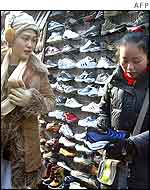
At last we've found wives, but now you've started living the single life; At last we've got sweets to eat, but now you've got diabetes; At last we can take a rest from wiping the sweat, but now you're sweating in the gym and the sauna; At last we've got the telephone installed but now you're chatting online; At last we can go on dates to the movies, but now you're finding romance on the net; At last we've got enough to eat and warm clothes to wear, but now you're dieting and wearing skimpy tops. Reality check Thinking about it of course, this little ditty certainly presents a glamorised version of what life is like for most people in the big city - even one as developed as Shanghai.
For every swinging single vegetarian diabetic yuppie, on his or her way to a skimpy-topped sweaty gym workout before a hot date with someone they have just met on the internet, there will be I do not know how many people whose income does not allow them to aspire to such a lifestyle. Similarly, it would be nice to believe that the telephones, movies and sweets are now a ubiquitous feature of the rural lifestyle. And they may be in some places in the relatively well-off and fertile coastal provinces. But in the remote and mountainous interior, there is probably scope for a poem called the Poor Peasants' Grumbles to the Rich Peasant. The economists, of course, have been voicing their anxieties about the growing gap between city and countryside. Some of it gets published, some of it does not. They are talking about an economic gap, as economists do, a distance from point A to point B, which can be expressed in GDP figures. Alien lifestyles But there is also a reality gap - the fact that people in the big cities just do not experience what it is like in the countryside. Yes, of course, you do see the poor farmer come to the big city.
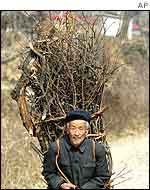
Many of them blend in among the scruffily dressed hordes of construction workers manning this the world's biggest building site. And there are the weather-beaten men with rough warm clothes and sacks of produce over their shoulders riding Shanghai's sleek and spotless metro system. The city limits of Shanghai themselves embrace large swathes of countryside. The other day I took the boat to a particularly striking part of rural Shanghai. Chongming Island, in the middle of the Yangtze River delta, is a large flat affair. China describes it as the country's third largest island. That is if you include Taiwan - which the government most certainly does - and the tropical Hainan island in the far south. It is a fine day, with the island's golden stubbly fields glowing in the winter sunshine. Most of the houses are neat, two-storey, typical relatively affluent rural homes, basic but reasonably comfortable looking. Priced out of farming But many of them are empty looking. Already the taxi driver taking me to the ferry port from the city centre has told me he is from the island, but cannot make a living farming the land. It is a thoroughly typical story. Grain prices are at rock bottom, so to keep up the family's income - they have just built one of those new houses themselves - he has got little choice but to go and work in the city. Except that it is much easier for him, because since the island is considered part of Shanghai, he does not really count as a migrant worker with all the bureaucratic disadvantages that status brings with it. But despite all this, the city and the countryside, viewed from a place like Shanghai, feel worlds apart. For many people, that is a good thing. In the bad old days of the Cultural Revolution, people got sent down to the countryside, straight from the foreign languages university or medical school to the pig farm. Some of them remain haunted by the unpleasant memories and do not want anything to do with the countryside. Back to basics For every trend, a counter-trend though. Chinese newspapers love to print stories about enthusiastic young volunteers from the cities, going to teach in rural schools, for example. And then there is the camping shop. The one I pass on my way to the cheap and cheerful canteen selling Chinese ravioli, or the supermarket. It is full of horrendously expensive water flasks and bivouac bags. Perhaps it will still be a while before they add a line to those list of rural grumbles, saying: "At last we've got out of our thatched roof cottage, but now you're sleeping in a tent." | |
See also:  21 Nov 02 | Asia-Pacific 19 Nov 02 | Asia-Pacific Internet links: The BBC is not responsible for the content of external internet sites Top From Our Own Correspondent stories now: Links to more From Our Own Correspondent stories are at the foot of the page. | ||||||||||||||||||||||||||||||||||||||||||||||||||||||||||||||||||||||||||||||||||||||||||||||||||||||||||||||||||||||||||||||||||||||||||||||||||||||||||||||||||||||||||
 | |
|  E-mail this story to a friend E-mail this story to a friend |
|  |
| Links to more From Our Own Correspondent stories |
| | | ||
 | ||||
 | | Back to top
| ||
| ---------------------------------------------------------------------------------- To BBC Sport>> | To BBC Weather>> | To BBC World Service>> ---------------------------------------------------------------------------------- © MMIII | News Sources | Privacy |






 At last we've got meat to eat, but now you've gone vegetarian