
|
 |
 | | | | | | |||||||||||||||||||||||||||||||||||||||||||||||||||||||||||||||||||||||||||||||||||||||||||||||||||||||||||||||||||||||||||||||||||||||||||||||||||||||||||||||
| | | You are in: Programmes: From Our Own Correspondent | |||||||||||||||||||||||||||||||||||||||||||||||||||||||||||||||||||||||||||||||||||||||||||||||||||||||||||||||||||||||||||||||||||||||||||||||||||||||||||||||||
|
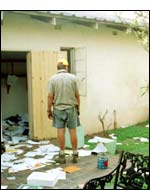
| | Saturday, 9 November, 2002, 11:40 GMT Zimbabwe's casualties  Many thousands of black farm workers are destitute The government in Zimbabwe is expected to present its annual budget statement next week. There will doubtless be promises of a brighter future, but few people expect them to reverse the country's deepening political and economic crisis. Land reforms have left the key agricultural sector in disarray. White farmers are being chased away, the black farm workers uprooted from heir homes. Crops have failed and millions are facing starvation. Mike Donkin, who has just returned from Zimbabwe, believes their lot can only improve when President Robert Mugabe has gone. I sit down to Sunday lunch with some white couples - a sort of wake as their farms are picked off one by one by the so-called war veterans. The children are splashing in the pool under the lilac jacaranda trees, the pink hibiscus in full bloom.
But it all quickly turns to gallows humour as more beers are sunk. And talk of "making the plan", if they have to leave Zimbabwe fast. Over on the hearth, there's a rack of briar pipes and a carved clock that has ticked away for 80 or 90 years. On the bookshelf are the memoirs of a major general who helped Rhodes to carve out Rhodesia. In another cottage garden, a farmer's wife regrets losing her long-serving family cook. "He's had to go," she says. "Peter - I can't recall his second name." Black servants and black workers have always lived in the shadows, in basic houses - often shacks or mud huts. But, as Robert Mugabe's land reforms bring them out into the open, it is not to bask in new homes and gardens of their own. The government brands these workers guilty by association. Kicked off the farms, you see them sleeping rough with their bundles, blankets and children at the roadside. You find them cooking up the day's porridge meal - if they can get the maize - in scattered camps that are already overstretched. A million-and-a-half people have now become refugees in their own country. The people who the reforms are supposed to have empowered have been building their huts on the land they've suddenly inherited. It is early days but they are clearly far from settled yet. Feeding Zimbabwe One man I walk across a bare field to meet says he's a factory hand and his new garden is proving a bit of a handful. He's been digging a well for a week and he's not struck water yet. He shows me the flock of chickens he's bought. "I lose them," he says. "They keep straying onto the road."
You drive past many such smallholdings, in the most remote of places. Here and there groups of neat-uniformed children make the long, long journey to school. There are no shops, no clinics for these transplanted communities to use. Future plans When you reach one of the villages on land the white farmers did not choose to settle, you can see why. This is where drought now parches the red earth and threatens the villagers with hunger. The huts here are grouped in neat, mud-floored compounds, swept clean by each householder with her bundle of twigs. Two girls of nine or 10 are shakily pushing a wheelbarrow loaded with water barrels, which they have had to ferry from a distant dam.
But then he tells the story of one woman who decided to decorate her hut with the open-hand, the symbol of the opposition Movement for Democratic Change. "The next day a gang of government supporters came to beat her," he says. "And they threw her a fresh can of paint to cover it up." In every Zimbabwean house, farm and garden, Robert Mugabe is leaving his mark right now. He makes his plans for their future in Harare's ex-colonial presidential palace, set in sweeping grounds. It's guarded by watchful troops - their bayonets fixed. The word is that Mr Mugabe hardly ever sleeps there - a different bed every night, they say. For now, though, as his people - black and white - migrate because of his land crusade, Mr Mugabe has no plans to move house permanently. Until he goes, it's hard to see how Zimbabwe can be a national home of which its people can be proud. | |
See also:  08 Nov 02 | Business 07 Nov 02 | Africa 18 Oct 02 | Africa 18 Sep 02 | Africa Internet links: The BBC is not responsible for the content of external internet sites Top From Our Own Correspondent stories now: Links to more From Our Own Correspondent stories are at the foot of the page. | |||||||||||||||||||||||||||||||||||||||||||||||||||||||||||||||||||||||||||||||||||||||||||||||||||||||||||||||||||||||||||||||||||||||||||||||||||||||||||||||
 | |
|  E-mail this story to a friend E-mail this story to a friend |
|  |
| Links to more From Our Own Correspondent stories |
| | | ||
 | ||||
 | | Back to top
| ||
| ---------------------------------------------------------------------------------- To BBC Sport>> | To BBC Weather>> | To BBC World Service>> ---------------------------------------------------------------------------------- © MMIII | News Sources | Privacy |




 There are no shops, no clinics for these transplanted communities to use


