|
 |
 | | | | | | ||||||||||||||||||||||||||||||||||||||||||||||||||||||||||||||||||||||||||||||||||||||||||||||||||||||||||||||||||||||||||||||||||||||||||||||||||||||||||||||||||||||||||||||||||||||||||||||||||||||||||||||||||||||||||||||||||||||||||||||||
| | | You are in: Middle East | ||||||||||||||||||||||||||||||||||||||||||||||||||||||||||||||||||||||||||||||||||||||||||||||||||||||||||||||||||||||||||||||||||||||||||||||||||||||||||||||||||||||||||||||||||||||||||||||||||||||||||||||||||||||||||||||||||||||||||||||||||
|
| | Monday, 13 January, 2003, 12:37 GMT Washington talks up threat of war  UN weapons inspections have found nothing so far A senior US official has bluntly warned Iraq that if it does not surrender weapons of mass destruction it will face military action. The head of the US Defence Department policy board, Richard Perle, told the BBC that United Nations inspectors currently scouring Iraq had no chance of finding weapons because they had been hidden.
Baghdad denies it has banned weapons, but the US is building up its forces in the Gulf to back its threat of military action unless Iraq disarms. Weapons inspectors are due to report to the UN Security Council on 27 January. An unnamed senior figure in the US administration - correspondents say at cabinet level - has told the Washington Post newspaper that 27 January will be the start of a final phase leading to decisive action. The comments appeared to contradict Secretary of State Colin Powell who said last week that the day should not be regarded as a time of reckoning. Mr Perle told the BBC's The World Today programme that Iraqi leader Saddam Hussein was already in material breach of UN Security Council resolutions because he was hiding weapons that he was required to surrender.
"I don't see how the inspectors have a reasonable chance of finding a small object in a large space," he said. "We are talking about stocks of chemical and biological weapons - possibly work on nuclear weapons - and this can all be done in any one of several million structures in Iraq. "Unless the inspectors know exactly where to go, the chance that they will find anything is practically zero.
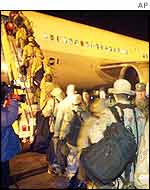
"It seems to me that either Saddam will turn over these weapons at the very last minute or there will be military action." Mr Perle said the evidence against Iraq lay in the discrepancy between the amount of weapons known to have been produced and what has so far been destroyed. "We must assume that what is unaccounted for is hidden," he said. The Washington Post article quoted the senior US figure as saying that Iraq would not be in the clear even if inspectors failed to find banned material. "What we're saying is that with the Iraqi record, there is a presumption of guilt and not innocence," the official said. "The idea that the inspectors have to find something, or that we have to show them where to go to find something, is incorrect." Inspections continue Mr ElBaradei, speaking in Paris, was responding to an earlier statement from an IAEA spokesman that a credible inspection of Iraq would take about a year. "We need to take a few months... how long depends on the co-operation of Iraq," he said. "There is an understanding in the Security Council that 27 January is an update report." He added: "There is a great deal of anxiousness that we need to finish our job, our mission, as soon as possible." In Iraq, UN inspectors visited at least six more sites on Monday, including a missile factory at Faluja, west of Baghdad, and two science faculties in the capital. Mr ElBaradei and chief UN weapons inspector Hans Blix are due to visit Baghdad next weekend to discuss gaps in Iraq's arms declaration. Weapons experts from the IAEA and the UN Monitoring, Verification and Inspection Commission (Unmovic) have made hundreds of visits since returning to Iraq in November. Military build-up The BBC's Pentagon correspondent, Nick Childs, say that the rapid acceleration of American military build-up in the Gulf gives the impression that war is a lot closer. Large numbers of marines are included in the latest deployments - precisely the kind of forces needed to launch a rapid attack. A senior Pentagon official told the BBC the US could have about 150,000 personnel in and around the Gulf by the end of next month. | |
See also:  13 Jan 03 | Middle East 13 Jan 03 | Politics 12 Jan 03 | Europe 10 Jan 03 | Middle East 09 Jan 03 | Politics 09 Jan 03 | Middle East 27 Dec 02 | Business 13 Jan 03 | Europe 13 Jan 03 | Middle East Internet links: The BBC is not responsible for the content of external internet sites Top Middle East stories now: Links to more Middle East stories are at the foot of the page. | ||||||||||||||||||||||||||||||||||||||||||||||||||||||||||||||||||||||||||||||||||||||||||||||||||||||||||||||||||||||||||||||||||||||||||||||||||||||||||||||||||||||||||||||||||||||||||||||||||||||||||||||||||||||||||||||||||||||||||||||||
 | |
|  E-mail this story to a friend E-mail this story to a friend |
| |
| Links to more Middle East stories |
| | | ||
 | ||||
 | | Back to top
| ||
| ---------------------------------------------------------------------------------- To BBC Sport>> | To BBC Weather>> | To BBC World Service>> ---------------------------------------------------------------------------------- © MMIII | News Sources | Privacy |





 It seems to me that either Saddam will turn over these weapons at the very last minute or there will be military action