
|
 |
 | | | | | | |||||||||||||||||||||||||||||||||||||||||||||||||||||||||||||||||||||||||||||||||||||||||||||||||||||||||||||||||||||||||||||||||||||||||||||||||||||||||||||||||||||||||||||||||||||||||||||||||||||||
| | | You are in: Middle East | |||||||||||||||||||||||||||||||||||||||||||||||||||||||||||||||||||||||||||||||||||||||||||||||||||||||||||||||||||||||||||||||||||||||||||||||||||||||||||||||||||||||||||||||||||||||||||||||||||||||||
|
| | Friday, 13 December, 2002, 21:32 GMT Iraqi dossier 'full of holes' 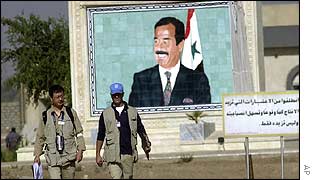 Iraq insists its declaration is full and frank A preliminary report by the United States on Iraq's weapons dossier has found the declaration to be full of omissions, US media report. The document contains scant new information and fails to account for missing chemical and biological weapons, according to senior US officials quoted by the New York Times.
The 12,000-page dossier is being examined by US intelligence officials and a final assessment is unlikely to be completed for several weeks. UN weapons experts, meanwhile, continued inspecting suspicious sites around Baghdad on Friday, visiting a hospital for diseases and a missile plant. However, the inspection of one of the hospital's laboratories was briefly held up, and inspectors had for the first time to use their hotline with Iraqi officials to solve the problem. Iraq denies US accusations it possesses banned weapons of mass destruction and has accused America of seeking to create a pretext to attack it. A UN resolution passed last month warned Iraq it faced "serious consequences" for making false statements or omissions, and US President George W Bush has threatened to disarm Iraq by force. Weapons 'missing' One unnamed US official told the New York Times the omissions in the dossier were "big enough to drive a tank through". The declaration fails to account for chemical and biological weapons that were missing when UN inspectors left Iraq in 1998, the US officials say.
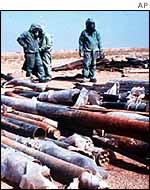
This includes hundreds of mustard gas shells and biological bombs, they say. Nor does the dossier explain why Iraq purchased material including uranium from Africa and hi-tech equipment from Western countries, which US officials say could be used in the manufacture of nuclear bombs. The newspaper reports that the declaration sheds light on Iraq's nuclear programme up until 1991, but does not account for activities afterwards. A UN diplomat who has seen the dossier said much of it "seems to be recycled" from earlier declarations, the newspaper reported. Iraq reiterated on Friday that its dossier provided a full and honest account of its weapons programmes. The declaration "is truthful and complete. [There are] no omissions in it," the Iraqi official responsible for liaising with the inspectors, General Hussam Mohamed Amin, told the Iraqi al-Iraq newspaper. Technical hiccup UN weapons teams for the first time carried out an inspection on the Muslim weekly day of rest on Friday.
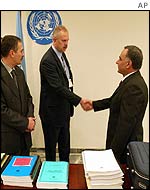
But inspectors from the UN Monitoring, Verification and Inspection Committee (Unmovic) were briefly held up when searching the Hospital of Communicable Diseases in central Baghdad. The hospital is a newly declared site, and for the first time the inspectors had to use their specially installed hotline with Iraqi officials to clarify minor procedural point before starting the search. General Amin was swiftly on the scene to resolve the brief incident. "This is a newly declared site and we want to clarify the tagging procedure, that is all," senior inspector Miroslav Gregoric said. On Friday, the inspectors also visited the Ibn al-Haitham missile centre in the north of Baghdad. The facility is believed to be used to design the short-range al-Sumoud missile. UN resolutions prohibit Iraq from possessing missiles with a range exceeding 150 kilometres (95 miles). | | 

See also: 13 Dec 02 | Middle East 12 Dec 02 | Middle East 11 Dec 02 | Americas 10 Dec 02 | Americas 10 Dec 02 | Middle East 09 Dec 02 | Americas 08 Dec 02 | Middle East 25 Sep 02 | Conflict with Iraq Internet links: The BBC is not responsible for the content of external internet sites Top Middle East stories now: Links to more Middle East stories are at the foot of the page. | |||||||||||||||||||||||||||||||||||||||||||||||||||||||||||||||||||||||||||||||||||||||||||||||||||||||||||||||||||||||||||||||||||||||||||||||||||||||||||||||||||||||||||||||||||||||||||||||||||||||
| |
|  E-mail this story to a friend E-mail this story to a friend |
| |
| Links to more Middle East stories |
| | | ||
 | ||||
 | | Back to top
| ||
| ---------------------------------------------------------------------------------- To BBC Sport>> | To BBC Weather>> | To BBC World Service>> ---------------------------------------------------------------------------------- © MMIII | News Sources | Privacy |





 [The omissions are] big enough to drive a tank through
 58.14%
  41.86%


